Blackstone’s Khaira: AI-buildout debt fears are overblown
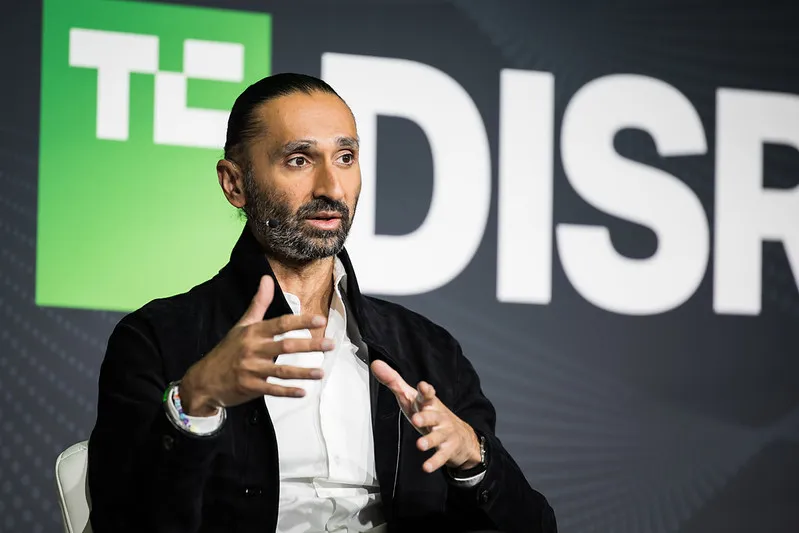
Private equity firm Blackstone is placing itself at the center of the AI boom, and Jas Khaira, the firm veteran who leads its AI hub, defended the buildout’s financing on stage at TechCrunch Disrupt. Khaira argued that fears over accumulating AI-infrastructure debt are overblown, even as neocloud operators face rising borrowing costs and market pressure.
Blackstone has approached AI differently from earlier tech cycles, Khaira said. Mobile and SaaS companies could scale with moderate capital, but the transition to AI requires enormous investment, which is why Blackstone — with $1.3 trillion in assets under management — can play a critical role. The firm launched Blackstone N1 (BXN1), a San Francisco-based hub for its AI initiatives, and Khaira relocated from New York to lead it. Blackstone’s angle is compute financing rather than traditional venture capital, with flexible structures ranging from debt to equity. “We’re the largest owner of compute outside of the hyperscalers today,” Khaira said, pointing to investments in neoclouds and data centers that can be used strategically to support companies.
Neoclouds, cloud providers that rent out AI GPU infrastructure, have become a major financing target. Blackstone pioneered a structure that lets it lend large sums to venture-backed neoclouds by analyzing committed customer contracts and treating GPUs as collateral. Its first deal was with CoreWeave in 2023, when the neocloud had only $30 million in revenue and minimal profitability and asked for a $2.3 billion loan. Blackstone was comfortable because CoreWeave was borrowing against its large collection of Nvidia GPUs and had contracts with blue-chip customers like Microsoft; Nvidia was also an investor. That transaction became the model for billions in follow-on debt to CoreWeave and rivals, and Blackstone later co-led a $10 billion credit facility for Australian GPU provider Firmus alongside Coatue. BXN1 has also backed compute-related startups including Crux AI, a Google-partnered neocloud commercializing Google’s custom TPUs, with Blackstone committing $5 billion as an investor, and Etched, a four-year-old chip startup.
That lending model is now facing scrutiny. CoreWeave’s debt has grown to about $50 billion, and Altimeter Capital founder Brad Gerstner said on CNBC that the collateral CoreWeave is putting up — primarily GPUs — “is not good enough anymore.” Khaira acknowledged recent market jitters, attributing them to interest rates that ticked up in September, hotter-than-expected inflation, and a flood of AI-infrastructure debt offerings. Lenders are charging higher credit spreads on top of higher base rates, and the cost of debt has widened even for tech giants like Meta and Microsoft. The pressure has hit markets: CoreWeave shares dropped more than 20% in recent days, and Firmus scrapped its planned IPO at a target valuation of roughly $30 billion. Khaira said of Firmus: “Ultimately, the market wasn’t there at that valuation.” The market is trying to figure out the right price for neoclouds in a moment when interest rates are moving up.
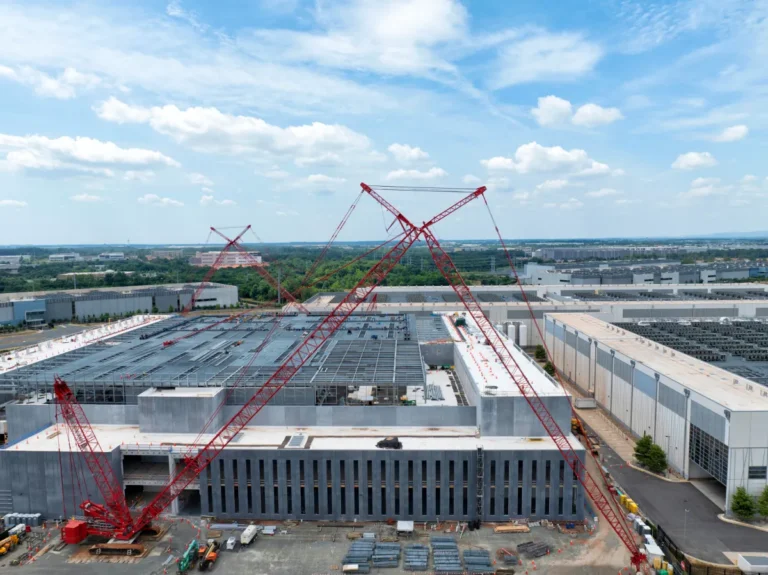
Despite those pressures, Khaira pushed back on fears of a broader credit crisis. “This doesn’t feel like something where you’ve got 2008 banks that are shaky credits,” he said. Because most data centers are built for hyperscalers, he argued, the debt financing them is backed by the most creditworthy companies in the world. AI companies still cannot get enough compute, and demand continues to drive data center construction.
Separately, Blackstone is helping companies adopt AI through Ode with Anthropic, a $1.5 billion joint venture formed with Anthropic and Hellman & Friedman. Ode supplies forward-deployed engineers to integrate AI into operations, starting with Blackstone’s 280 portfolio companies. Khaira said there is “definitely ROI, but it is uneven,” describing adoption as a sawtooth pattern that can look like an oversupply of compute before usage catches up.