TechCrunch glossary defines opaque recurrence and other AI terms to know
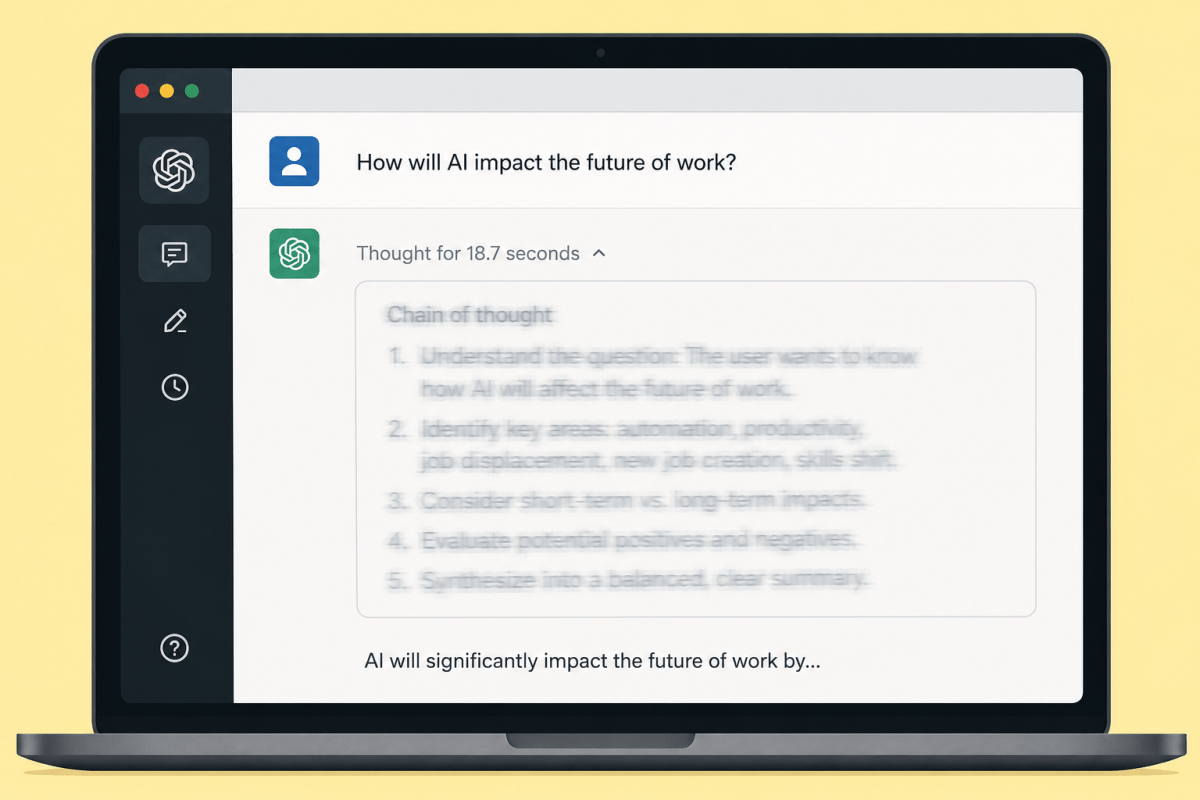
TechCrunch has published a living glossary of AI terms for product meetings, pitches, and industry coverage. The article opens with opaque recurrence, the reasoning technique in OpenAI‘s Astra model that has rattled safety researchers. Opaque recurrence means a model loops the same query through its internal layers repeatedly instead of working through a chain of thought in plain language. It is more efficient and lets smaller models do more with less compute, but it leaves far fewer readable traces, and safety researchers rely on those traces to catch misbehavior. Recurrent depth is the engineering term for the same method. Neuralese is a related hypothetical worst case in which a model reasons entirely in internal numeric representations rather than human-readable language. No shipped model does this today, and OpenAI says Astra keeps its chain of thought legible, but researchers see opaque recurrence as a real first step in that direction.
The glossary then covers fundamentals behind models. LLMs are deep neural networks with billions of numerical parameters that map relationships between words; neural networks are multi-layered algorithmic structures inspired by the brain; deep learning identifies features from data without human-defined features, but needs millions of data points and longer training time. Training is the process of feeding data into a model so it can learn patterns, while inference is the process of running the model to make predictions. Compute means the computational power and hardware such as GPUs, CPUs, and TPUs; parallelization is doing thousands of calculations at once, which is why GPUs became the industry backbone. Weights are numerical parameters that adjust during training; tokens are text chunks used by an LLM and usually determine API cost; token throughput measures how many tokens a system can process at once. Memory caching, especially KV caching, speeds inference by reusing calculations. Validation loss is a report card during training that flags overfitting. The article also explains chain of thought, fine-tuning, transfer learning, reinforcement learning, and RLHF as ways to improve outputs.
Several entries explain model techniques and new infrastructure. Chain of thought breaks a problem into intermediate steps and often takes longer but gives better answers in logic and code. Distillation uses a teacher model’s outputs to train a smaller student model, and the article says this is likely how OpenAI developed GPT-4 Turbo. Diffusion learns reverse noise to regenerate data and underlies many art, music, and text generators. GANs pit a generator against a discriminator and work best for narrower applications like realistic photos or videos. Mixture of Experts activates only a subset of specialized sub-networks through a router, as in Mistral’s Mixtral, and OpenAI‘s newer GPT models are widely believed to use a version of it. API endpoints are the integration buttons that programs and AI agents can press. Coding agents are specialized AI agents that can write, test, and debug code across a codebase with human review. Model Context Protocol, introduced by Anthropic in 2024 and handed to the Linux Foundation, is an open standard adopted by OpenAI, Google, and Microsoft that lets models connect to files, databases, and apps like Slack and Google Drive.
Finally, the glossary sets terms in business and safety context. AGI is defined differently by OpenAI and Google DeepMind, and experts still disagree. AI agents are tools that perform multistep tasks on a user’s behalf, though the space is still maturing. Hallucination is the industry term for fabricated outputs, and it is pushing interest in specialized and vertical AI models. Open source examples, such as Meta’s Llama and Linux, enable independent audits, while closed source products like OpenAI‘s GPT models do not. Recursive self-improvement can mean a singularity-like scenario or simply whether a model can design its own successor. RAMageddon describes a RAM shortage caused by AI companies buying memory for data centers; it is driving prices up in gaming, consumer electronics, and enterprise computing. The article says it will be updated regularly as the field evolves.