Nvidia GPUs head to the moon with Lunar Outpost rover
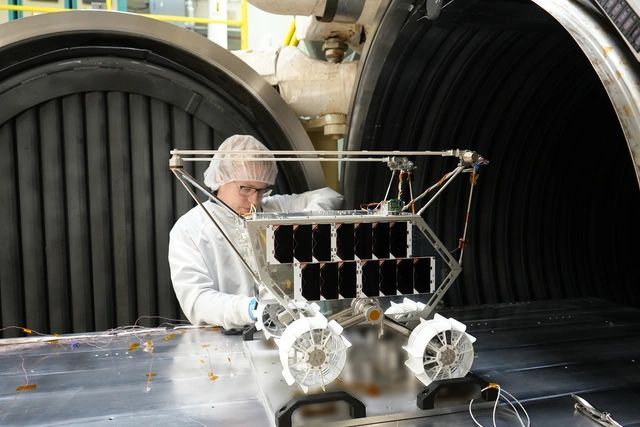
Lunar Outpost announced that its next moon rover will use Nvidia‘s Jetson chips to control its lidar system, which is likely the first GPU on the lunar surface. The startup is testing Jetson against its existing flight compute platform to evaluate trade-offs in extreme environments. The mission is part of NASA’s broader campaign to pay private companies to explore the moon ahead of a planned human return, possibly by 2028. Nvidia also recently partnered with Firefly Aerospace to operate Jetson on a satellite orbiting the moon for imagery processing, including tracking surface robots.
The Jetson platform is compact and power-efficient, enabling robotic systems to process sensor inputs locally for faster reactions—a shift from purely deterministic autonomy to combining deterministic models with physical AI. Operating GPUs on the moon is challenging due to cosmic radiation and temperature swings from lunar day to night; the system must survive on very low power. If successful, the rovers will be more capable in navigating and decision-making.
Each mission is scheduled to launch on a Falcon 9 rocket before the end of the year. Lunar Outpost has several smaller rovers and a larger one, Pegasus, intended to carry astronauts. Pegasus is waiting on a Blue Origin rocket that suffered an anomaly this summer; Lunar Outpost‘s CEO says they remain on the same timeline for 2028. The company aims to move from exploration to a permanent human presence on the moon, using a robotic workforce enabled by physical AI.