Startup News from Google I/O 2026: Models, Agents, and Developer Tools
Google I/O 2026 announcements for startups center on new frontier models, a unified agent control plane, faster development workflows, and a personal AI agent. Gemini 3.5 Flash delivers flagship-level intelligence at Flash speed and less than half the cost of comparable models, landing in the top-right quadrant of the Artificial Analysis index. Gemini 3.5 Pro (flagship reasoning) launches next month, and Gemini Omni blends text, audio, image, and video to produce dynamic video content for use cases like virtual try-ons and post-production workflows.
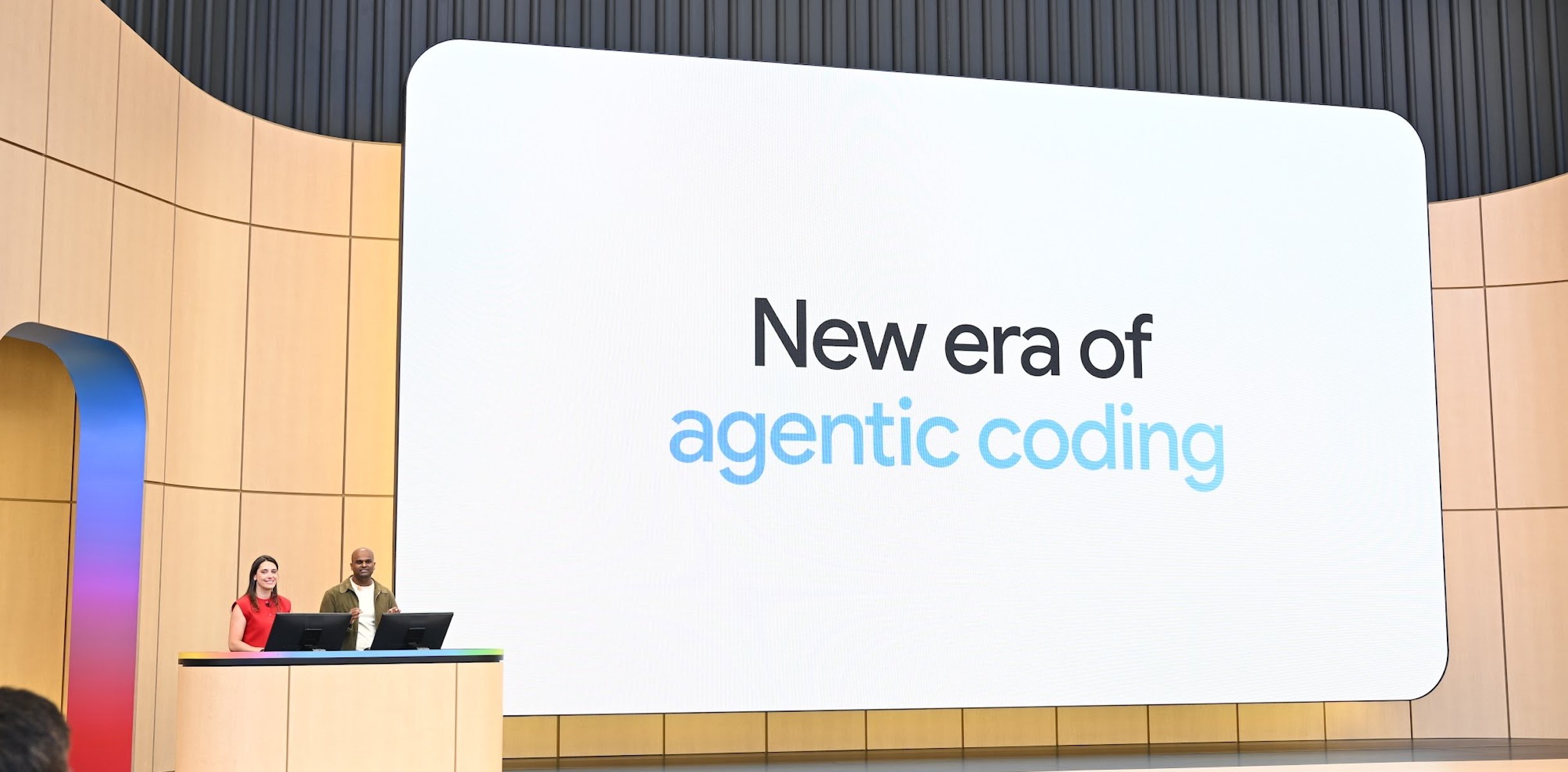
Antigravity 2.0 is a standalone desktop app (Mac, Windows, Linux) that acts as an agent-first workspace for building, testing, and orchestrating complex AI workflows without a traditional IDE. It includes a stack-agnostic CLI, a Python SDK, dynamic subagents (primary agents spawn specialized child agents for subtasks), scheduled tasks via cron, and enterprise-grade security that inherits Google Cloud’s data privacy protections. This complements the purpose-built cloud agents (SecOps, data, self-driving infrastructure) launched at Google Cloud Next ’26.
Developer acceleration includes native Android support in AI Studio: go from a natural language prompt to a fully native Android app in the browser, with direct publishing to the Google Play Console test track. A seamless handoff exports projects from AI Studio to Antigravity with one click, transferring codebase, files, and conversation context. The Managed Agents API (available via Gemini API and Agent Platform) acts as agent-as-a-service: define instructions and tools, and a single API call spins up the agent in a secure ephemeral sandbox, offloading backend maintenance.
Gemini Spark is a 24/7 personal AI agent that works across Google Workspace and other tools, autonomously executing multi-step workflows (e.g., identifying a product delay, recalculating timelines, updating sheets, drafting investor emails) while awaiting explicit approval before execution. The Google for Startups AI Agents Challenge offers $500 in cloud credits and a share of a $90,000 prize pool for building agents; submissions are open until June 5, 2026.
For founders, the key takeaway is that lean teams can now orchestrate data pipelines, manage security, and execute massive parallel coding tasks from a single secure environment, while Spark handles routine operations. The stack provides a straightforward path from prototype (AI Studio) to local orchestration (Antigravity) to managed cloud deployment.