WindBorne wins up to $49M Air Force contract for balloon weather data
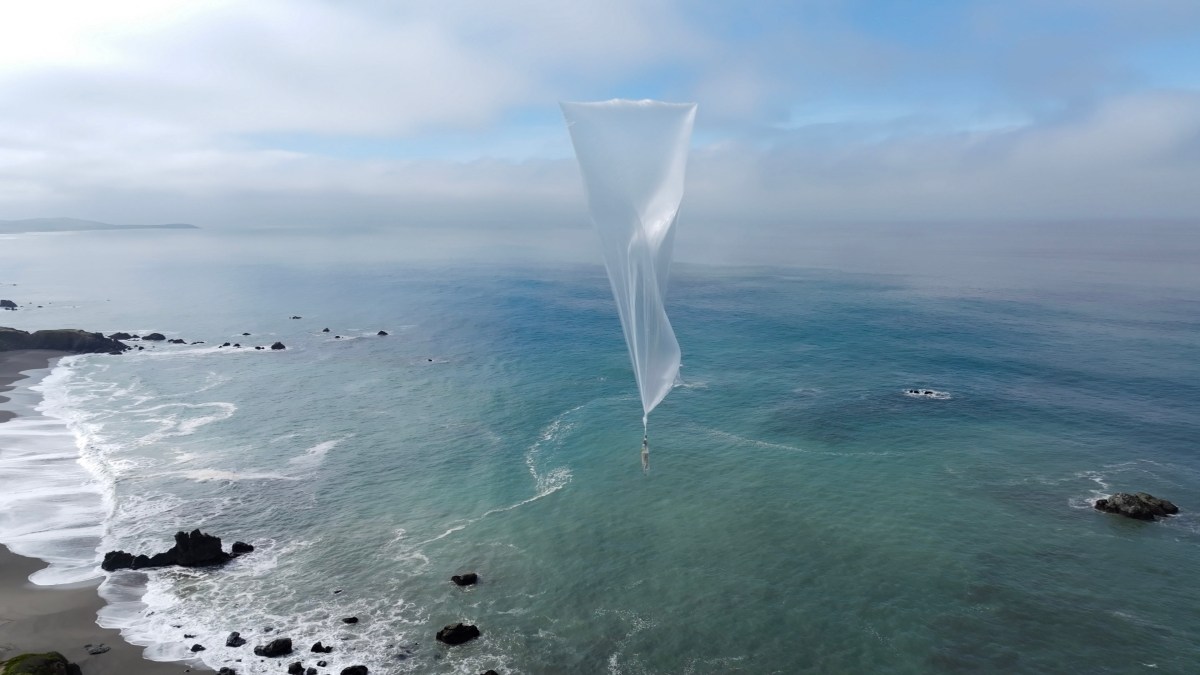
The U.S. Air Force has awarded WindBorne Systems a contract worth up to $49 million to buy atmospheric data collected by its fleet of about 700 autonomous weather balloons. The contract is structured as an ordering vehicle: the Air Force pays only for the data it requests, for specific regions at specific times, and has so far ordered $1.7 million worth. WindBorne co-founder and CTO Andrey Sushko said the deal supports continued growth of the balloon constellation and R&D to improve hardware and performance. The contract was awarded without competitive bidding; Sushko described it as a government determination that WindBorne was the only company able to provide this global data-collection capability in the way the operations needed.
WindBorne, founded in 2015 and based in Redwood City, California, is one of the first organizations to directly feed empirical sensor data into a deep-learning weather model. The company has worked with the National Weather Service and the U.S. Air Force and Navy before, but this is its largest contract to date. Earlier this summer it released WeatherMesh 6, its latest forecasting model, which the company says is more accurate than the traditional physics-based model run by ECMWF, the European Centre for Medium-Range Weather Forecasts.
AI weather forecasting has advanced rapidly since transformer architectures and ECMWF‘s release of a large weather dataset. Instead of running expensive supercomputer simulations of atmospheric physics, end-to-end deep-learning models train on decades of weather data and issue predictions faster. Models from frontier labs and government agencies are proving more accurate than traditional forecasts, though the article notes it is still a jagged frontier and both approaches are needed. Google DeepMind’s latest weather model is also highlighted for new capabilities, with cyclone forecasting tools increasingly central to U.S. government hurricane response.
In August, WindBorne became the first organization to send an unpowered flight system—no engine—to collect data in the eye of a typhoon. The balloons are maneuvered by adjusting altitude, bleeding air, or dropping sand ballast to ride winds toward target regions. Sushko said the achievement required good wind and weather models and navigation, plus a large enough constellation to have balloons in the right places, calling it one of the first times a deep-learning model was used for actual operational decisions.