Why World Model Companies Keep Their Work Secret
At the All In conference, the author moderated a panel on world models and found the field unusually secretive. The major players are Yann LeCun’s AMI Labs and Fei-Fei Li’s World Labs, both heavily funded but far from monetization. World models are about automating spatial intelligence, with possible applications in robotics, interactive video, and self-driving systems, yet concrete commercialization plans are hard to pin down.
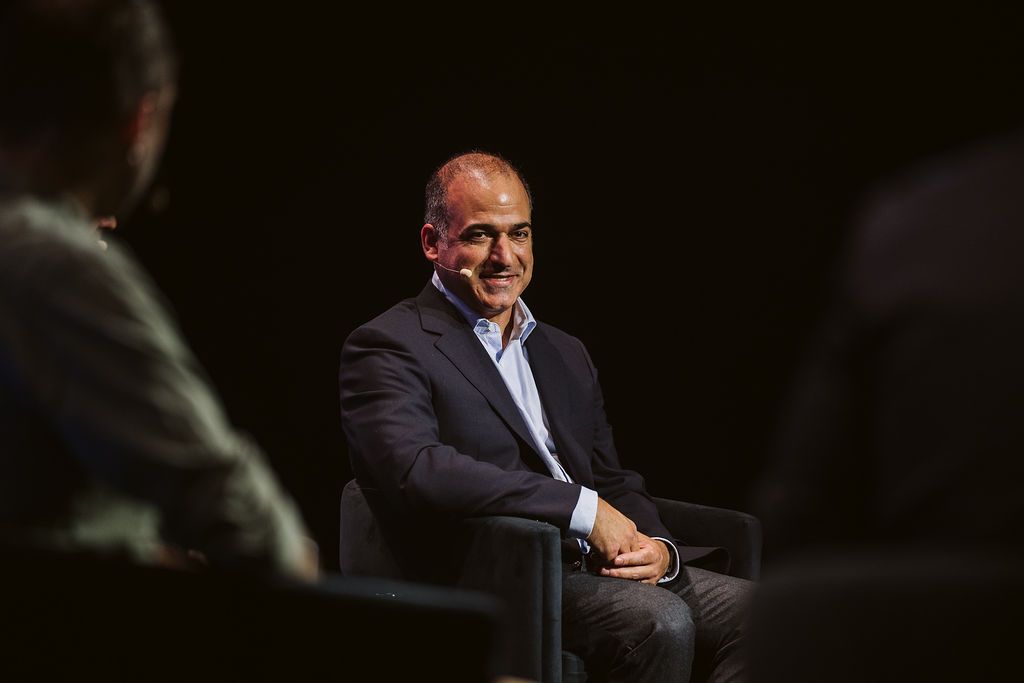
AMI Labs co-founder and VP of World Models Michael Rabbatt was evasive on the panel, saying, “We’ll talk about it when we’re ready to talk about it,” and later clarified by email that the company is still in a research and building phase with no public product plans or timeline. AMI is less than a year old, so some silence is reasonable, but the pattern extends across the space. World Labs’ Marble is the most developed product, but its demos—explorable environments for games, CGI effects, robotics—read more as capability demonstrations than a clear go-to-market. Even suppliers are in the dark: Physicl CEO Alex de Vigan, whose company supplies data for world model builders, says he knows his data is being used but not for what, and that knowing more would let him build more useful data.
The secrecy is partly a consequence of how versatile world models are. The same modeling approach that helps a Waymo navigate traffic could also power a humanoid robot carrying boxes or turn video footage into an explorable environment. AMI has already touched manufacturing, biomedicine, robotics, and AI software for doctors through its Nabia partnership, though it cannot pursue all of them. With fundraising easy, there is little pressure to commit to one path—and there is a strategic reason not to. If AMI announced a specific product, other labs would take notice, and the space would quickly attract competition from other world model companies, neolabs, OpenAI, and Anthropic. The same easy money that lets a company build quietly also funds potential rivals once the market becomes clear, so the rational move is to delay that moment by keeping quiet. The author frames this as a Dark Forest scenario, borrowing from Cixin Liu: if you do not know who else is in the woods, it is best not to attract attention.
The piece is an industry analysis based on conference conversations and public statements, not a technical review. It does not reveal what AMI or World Labs are actually building, and the author acknowledges that the secrecy is partly justified by the companies’ early stage.