Why AMI Labs’ CEO won’t call his AI ‘AGI’ or ‘superintelligence’
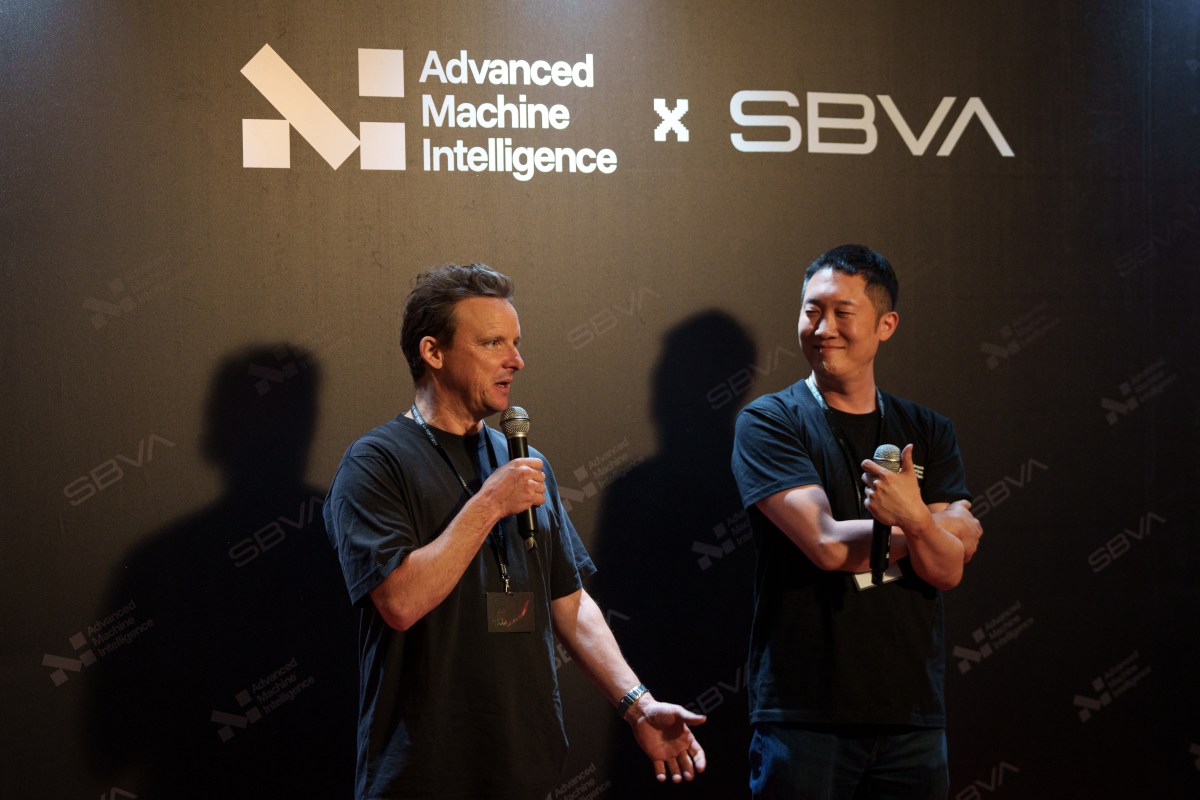
The AI industry is obsessively rebranding itself from AGI to superintelligence, but AMI Labs CEO Alexandre LeBrun bluntly refuses to play the labeling game. He points out that the term “AGI” is already being dropped and that “superintelligence” has no useful definition. For a founder backed by $1.03 billion and a Turing Award-winning co-founder, this is a deliberate signal: the real problem isn’t nomenclature, but that AI remains “really dumb in the physical world.” Robots today run fixed routines and are not safe in open environments, and LLMs cover “only 1% of healthcare” because they lack the real-world experience a residency provides. The tension is between marketing narratives and the hard, unsolved engineering of grounding AI in physics.
LeBrun’s concrete technical path is building a world model that predicts the next state of the physical world, rather than the next token. This requires real environments, not just data-center training, which is why he was in Seoul scouting for industrial partners in robotics, manufacturing, and electronics. AMI Labs is still pre-product, but LeBrun argues that the hardware is already advanced; the missing piece is a “brain” that gives robots context awareness, like preventing one from kicking a child during a public demo. He is explicit that world models are complementary to LLMs, not replacements — LLMs will remain the most efficient tools for language, while world models provide the physical understanding that LLMs fundamentally lack.
The serious takeaway is that the next frontier of AI is not about bigger language models or flashier benchmarks, but about safely operating in the physical world. LeBrun’s attraction to South Korea, with its deep industrial base in chips and robotics and its history of fast tech adoption, reflects a bet that world models will be built in factories and hospitals, not in labs alone. For builders, the key insight is that physical AI demands partnerships with hardware-heavy industries and a willingness to move at the speed of manufacturing, not the speed of hype. AMI has nothing to sell yet, but its strategy suggests that the companies that will matter in the next wave are those that can make robots context-aware, not just conversational.