⭐⭐⭐⭐✨ 4.3
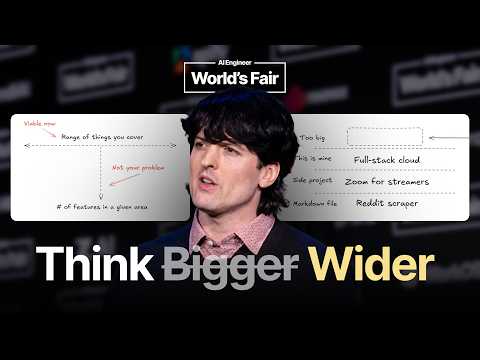
Theo Browne opens his closing keynote at the AI Engineer World’s Fair by arguing that the rapid leap from tool-calling models like Sonnet 3.5 to long-running task executors like Opus 4.5 and orchestrators like Mythos has made most current software engineering habits obsolete. He compares this moment to the design shift in iOS 7, calling much of today’s tooling—especially Git workflows and terminal-centric development—a skeuomorphic phase where builders cling to familiarity over actual utility. The real tension is that engineers are still optimizing for a world where they write every line of code, while models can now handle significant implementation details end-to-end.
Browne reframes project ambition with a new tier system: traditional categories like “side project” or “startup” no longer hold. He points to the “Markdown tier”—a cron job backed by a Markdown file—as a legitimate replacement for what once required a dedicated startup team. Because agents can execute long-running tasks and orchestrate complex workflows, the viable product surface area has expanded dramatically. Instead of building narrow depth in a single feature, Browne encourages teams to build for a wider spectrum of functionality, architecting products so users and AI agents can extend them.
The concrete takeaway is that the barrier to entry for competing with incumbents like AWS or Salesforce has collapsed. Engineers should stop limiting themselves by legacy constraints and start building platforms that cover more ground, trusting models to fill in implementation gaps. The key insight is not about building bigger in scope, but building wider in surface area, then letting orchestration and extensibility handle the rest.
Theo Browne opens his closing keynote at the AI Engineer World’s Fair by arguing that the rapid leap from tool-calling models like Sonnet 3.5 to long-running task executors like Opus 4.5 and orchestrators like Mythos has made most current software engineering habits obsolete. He compares this moment to the design shift in iOS 7, calling much of today’s tooling—especially Git workflows and terminal-centric development—a skeuomorphic phase where builders cling to familiarity over actual utility. The real tension is that engineers are still optimizing for a world where they write every line of code, while models can now handle significant implementation details end-to-end.
Browne reframes project ambition with a new tier system: traditional categories like “side project” or “startup” no longer hold. He points to the “Markdown tier”—a cron job backed by a Markdown file—as a legitimate replacement for what once required a dedicated startup team. Because agents can execute long-running tasks and orchestrate complex workflows, the viable product surface area has expanded dramatically. Instead of building narrow depth in a single feature, Browne encourages teams to build for a wider spectrum of functionality, architecting products so users and AI agents can extend them.
The concrete takeaway is that the barrier to entry for competing with incumbents like AWS or Salesforce has collapsed. Engineers should stop limiting themselves by legacy constraints and start building platforms that cover more ground, trusting models to fill in implementation gaps. The key insight is not about building bigger in scope, but building wider in surface area, then letting orchestration and extensibility handle the rest.