Spotify expands AI push with conversational music assistant for Premium users
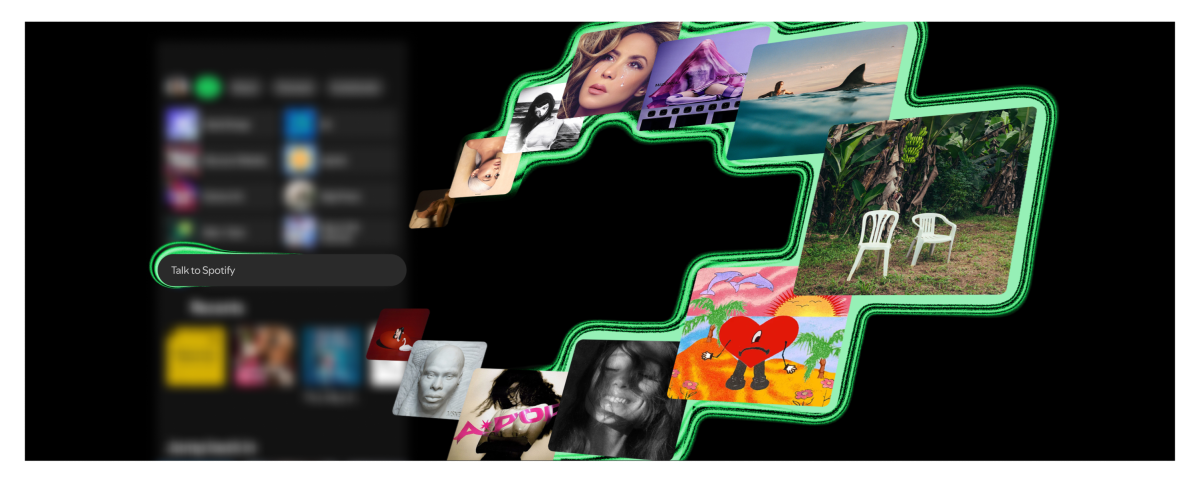
Spotify is rolling out a new conversational AI assistant for Premium users, initially in the U.S., Ireland, and Sweden on iOS and Android. The feature, currently in beta for users 18 and older in English, lets people chat (via text or voice) with the app to discover music, podcasts, and audiobooks. Users can ask questions about their listening history, learn trivia about songs or albums, and refine recommendations with natural language follow-ups like “make it more upbeat” or “play artists I haven’t heard before.” This goes beyond Spotify’s earlier AI DJ tool by embedding conversational interactions across the Home and Now Playing views, making the assistant more central to daily use. Spotify hasn’t disclosed full technical details, but confirmed to TechCrunch that it combines its own AI technology with models from multiple providers, selecting the best approach for each task. The beta launch signals that Spotify is investing heavily in AI-driven personalization and natural language interfaces to differentiate its massive catalog, treating the assistant as a dynamic layer over search and curation.
On the product side, Spotify is clearly iterating toward a deeper conversational loop. The AI DJ was a one-way broadcast with a synthetic voice; this new assistant supports back-and-forth dialogue tied to personal context. You can ask when you first played a track, request songs from a specific era, or have the assistant save tracks to your queue mid-conversation. The integration into both Home and Now Playing views means it’s not a gimmick buried in a menu—it’s a primary interaction mode. Spotify also suggests prompt templates (e.g., “play some artists I haven’t heard before”), which reduces friction for first-time users. Operationally, the reliance on multiple AI model providers suggests a modular architecture where different queries—factual Q&A, music recommendations, speech recognition—might route to specialized engines. This isn’t a monolithic LLM; it’s an orchestrated system trading off latency, accuracy, and cost.
The serious takeaway for builders is that conversational AI is becoming the new UI for content discovery, and Spotify’s approach highlights key design decisions. First, they’re not forcing pure chatbot generality—they’re scoping the assistant to music and audio context, which keeps expectations manageable and reduces hallucination risk. Second, they’re blending typed and spoken input seamlessly, which is harder than it looks because each modality requires different error handling and intent parsing (e.g., background noise vs. misspelled queries). Third, the feedback loop from beta users will likely surface edge cases around ambiguous requests (“play something happy” could mean tempo, lyrics, or genre) and multi-turn context baggage. For anyone building AI-powered products, this rollout underscores that intent-specific, context-aware assistants that learn from real usage patterns will beat generic chatbots in vertical applications. Spotify is running a live experiment in how much friction users tolerate in exchange for personalization, and the results will shape a generation of audio recommendation systems. Also worth noting: if the assistant surfaces obscure tracks that fit your exact mood, it could drive both engagement and royalty payouts—a direct business incentive beyond feature parity.