SpaceX S-1: AI Conglomerate Eyes $1.75 Trillion IPO
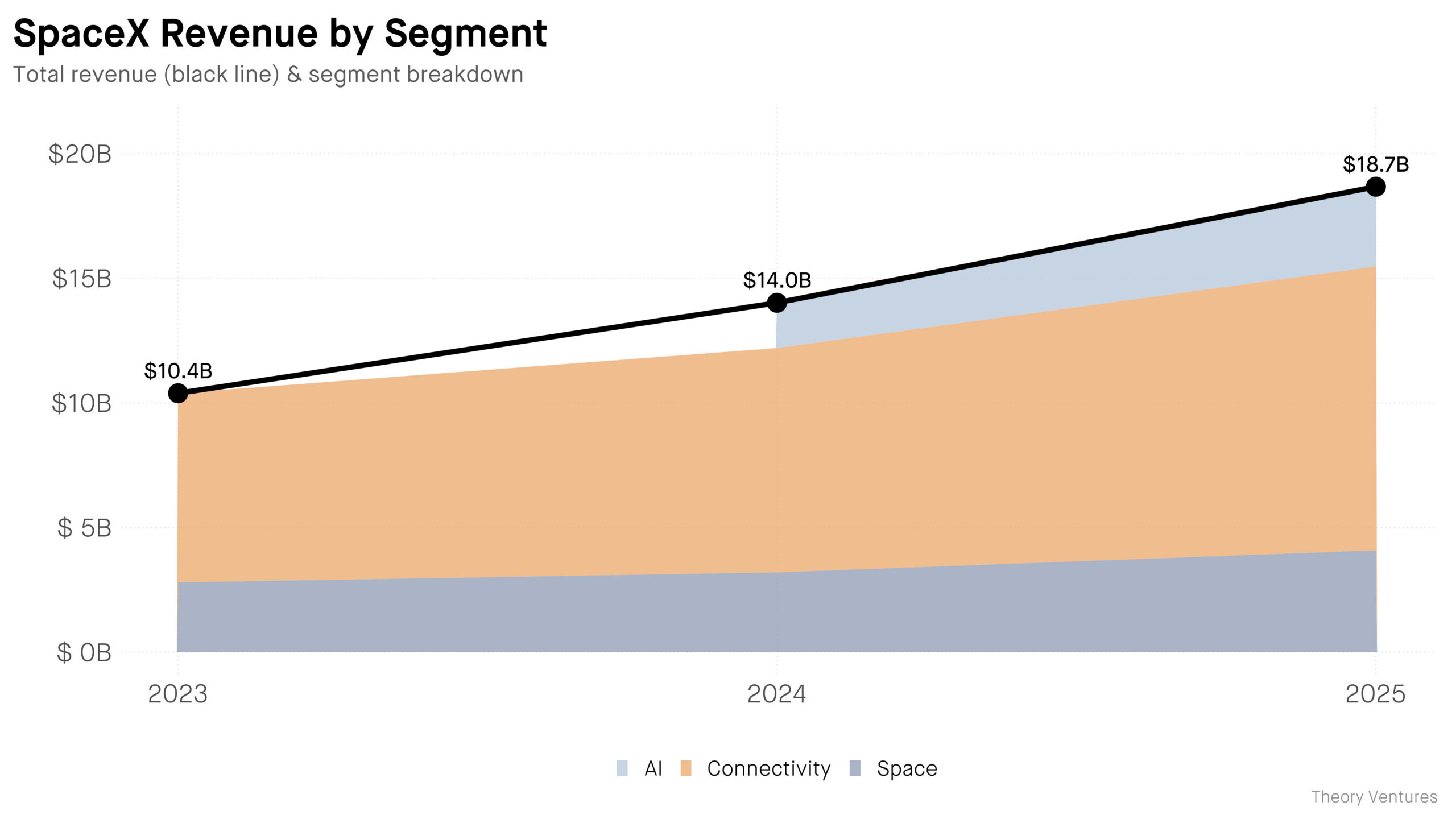
SpaceX filed its S-1 for an IPO on June 12, 2026, targeting a $1.75 trillion valuation. The filing reveals a three-segment conglomerate: Space, Starlink, and AI. In 2025, SpaceX generated $18.7 billion in consolidated revenue, with Starlink contributing 61% of total revenue at $11.4B and a 39% operating margin, making it the cash engine. The Space segment posted a $657M operating loss due to Starship R&D, while the AI segment burned $6.4B building infrastructure like the COLOSSUS clusters.
Technically, Starlink‘s economics demonstrate leverage: revenue grew 50% year-over-year, operating income grew 120%, and subscribers surged from 2.3M in 2023 to 8.9M in 2025. The Space segment dominates launches—over 80% of mass to orbit globally—with Falcon 9 boosters achieving up to 34 reflights. Starship development continues with 11 test flights, aiming for payload deliveries in H2 2026. The AI segment, including the xAI merger, spent $12.7B on CapEx for a gigawatt-scale AI training cluster, targeting 550M monthly active users on X and 117M using Grok.
The practical implication is SpaceX‘s vision of an orbital AI future. The S-1 outlines deploying AI compute satellites starting in 2028, leveraging space-based solar arrays with 5x more power per unit area than terrestrial sources to overcome Earth’s power constraints. Despite AI’s current negative margins and a revenue-to-CapEx ratio of 25%, Big Tech spent over $285B on AI/cloud infrastructure in 2025, dwarfing SpaceX‘s $12.7B. SpaceX‘s ambition is to become an AI conglomerate with three interconnected segments, though AI remains a capital-intensive bet with promise for future leverage.