Scientific computing in the age of agentic AI
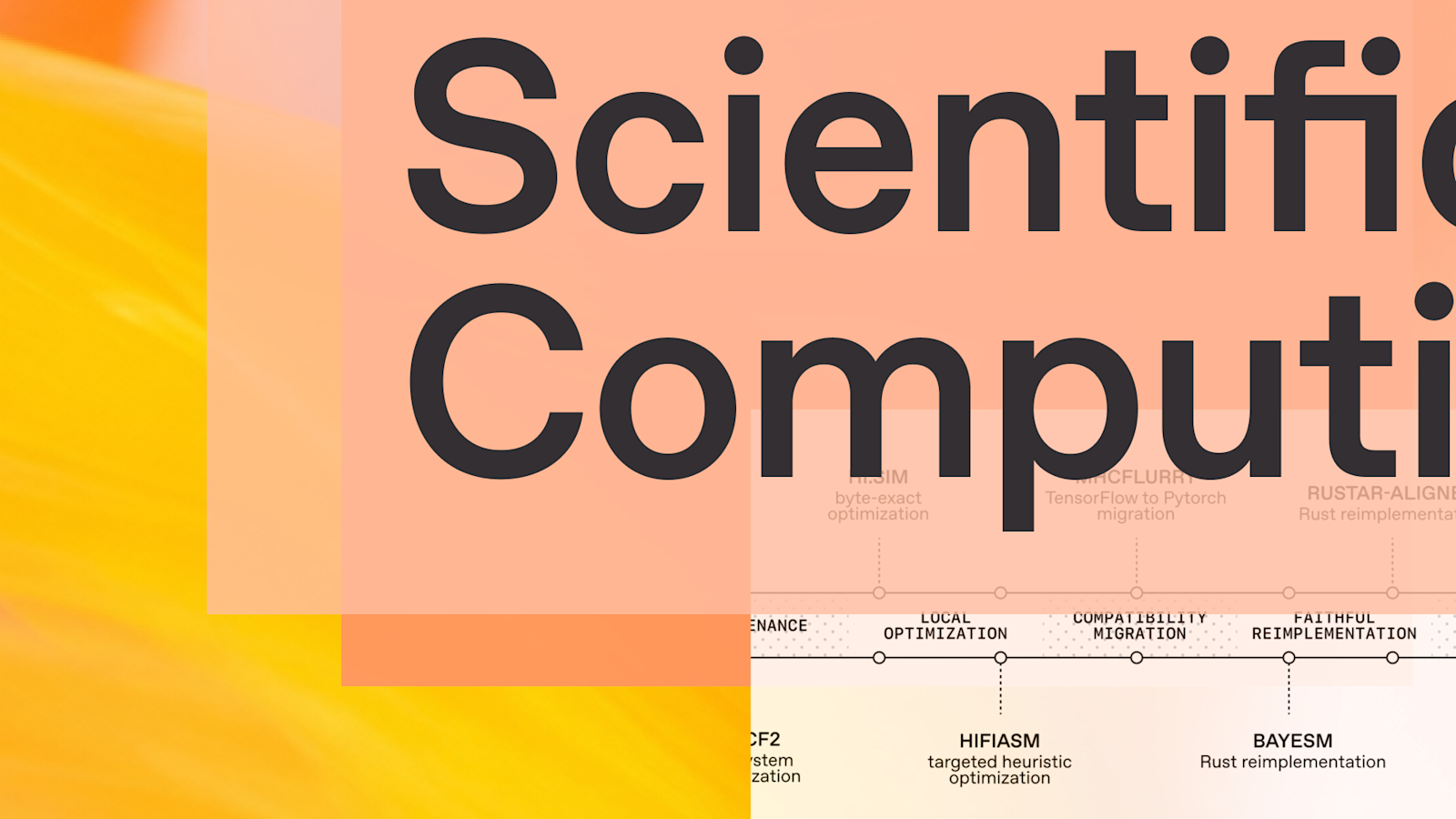
Scientific computing software often originates as code accompanying a research paper, built by small academic teams with limited engineering resources, leading to fragile, hard-to-maintain tools that impede discovery. AI agents, specifically Codex and Claude Code, are lowering the cost of engineering work, enabling researchers to prototype faster, tackle previously impractical projects, and maintain software more easily. This article presents an exploratory field report of eight agent-assisted projects primarily in the life sciences: five using Codex alone and three using both Codex and Claude Code. The projects range from routine maintenance and targeted optimization to large-scale language migrations and GPU-native redesigns. Contributors report that agents significantly accelerated development and maintenance, sometimes allowing small teams to accomplish work that would have required more time or specialized support.
A central theme is the shift from implementation to verification and orchestration: researchers specify what to build, define correctness criteria, and decide when to ship, while agents handle coding. Agents handled well-scoped requests effectively but often expressed confidence even when their work contained errors, so human validation remained essential. Strong validation approaches used external references or measurable acceptance targets such as exact output agreement or parity with existing tools. Projects proceeded in feedback-driven iterations; initial implementations came quickly, but resolving edge cases and numerical subtleties took much longer.
The report also highlights the need for long-term stewardship. Lower implementation costs risk fragmenting users and spreading expert attention thin. Changes to projects like MHCflurry and cyvcf2 were incorporated into original upstream projects, while rustar-aligner moved to new community stewardship because the original project was abandoned. Without clear ownership and maintenance plans, modern rewrites risk becoming tomorrow’s abandoned code. The deeper change is that researchers can focus more on defining, validating, and stewarding tools rather than just producing more software. As coding agents improve, researchers will spend less time keeping pipelines running and more time on discovery.