Pollo AI uses OpenAI models to turn ideas into video campaigns
Pollo AI is a platform that turns rough creative ideas into finished images and videos without requiring production expertise. The company was founded on the premise that generative AI should make video creation as accessible as Canva made design. Today it serves more than 26 million users who create videos, ads, and visual content. Its latest offering, Pollo Agent, uses OpenAI models including GPT-6 Astra and GPT-Image-2.5 to provide a fully guided workflow for video creation.
The problem Pollo AI addresses is that creators and marketers often struggle to navigate different tools and choose between models, even with generative AI in the picture. Some abandon projects in frustration. By integrating OpenAI models, Pollo AI makes more workflows practical inside the product, letting users start from simpler inputs, spend less time figuring out processes, and get stronger outputs more reliably.
Pollo Agent interprets rough ideas and visual references, then develops storylines, scene flows, and scripts. CTO Peter Zhou says OpenAI models stood out for their ability to understand ambiguous creative inputs and their multimodal capability, noting that GPT-5.6 performed especially well there. The team also values the OpenAI API’s stability and release cadence. To balance reasoning depth, speed, and cost, Pollo AI uses GPT-5.6 for routing and GPT-6 Astra for more challenging work such as developing narratives or planning scene revisions. This model mix matches reasoning level to the task based on the user’s prompt. Pollo AI reports that users spend more than 50% less time choosing or switching models.
Pollo AI tests generative models against real user prompts and workflows, evaluating output quality, consistency, stylistic range, speed, and cost. GPT-Image-2.5 was selected for image generation, helping creators make posters, storyboards, and campaign visuals. Zhou states that for any user image-generation task, Pollo AI always uses GPT-Image-2.5 because it is especially good at working with different types of characters and letters.
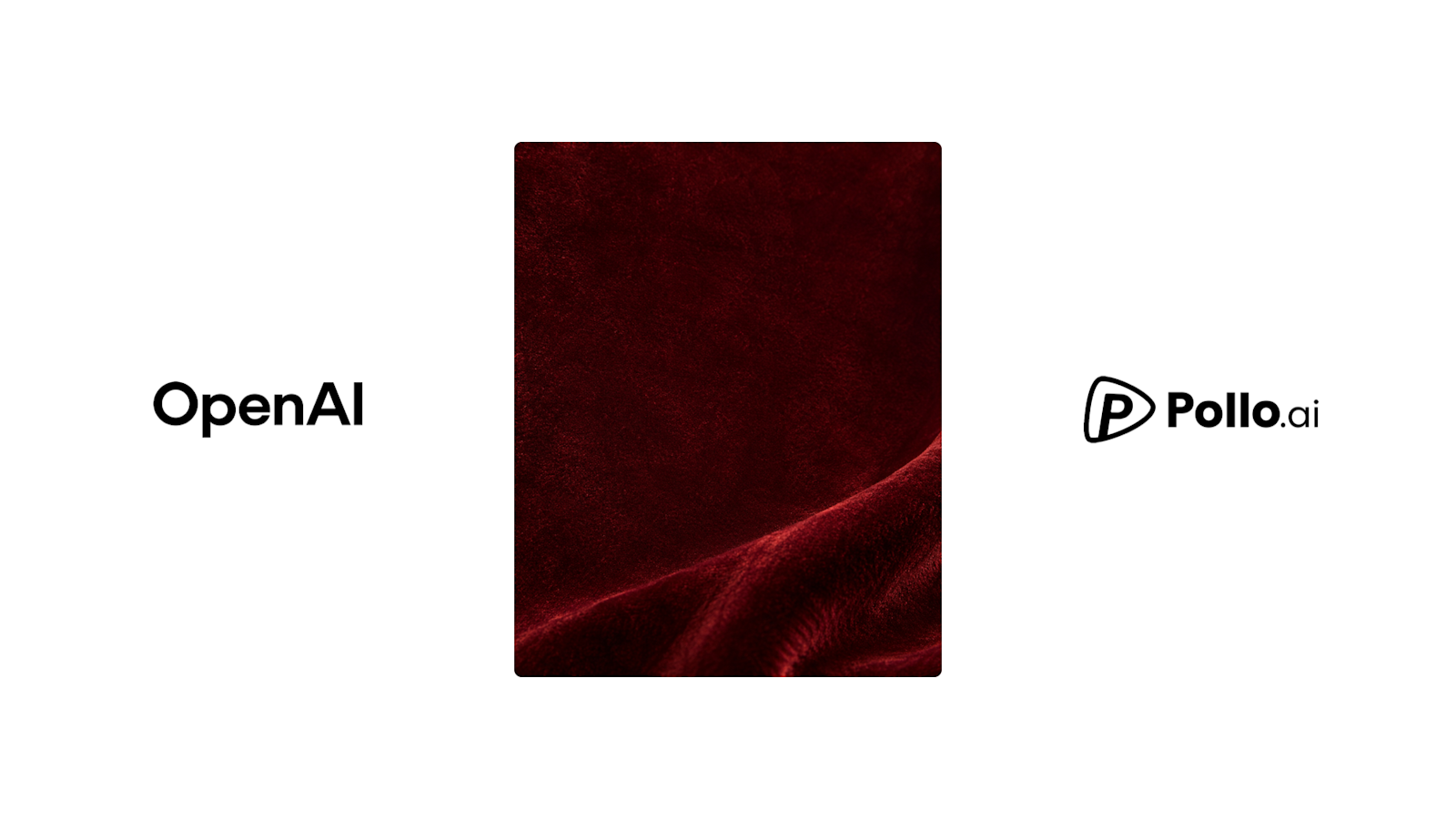
The platform’s primary users are content creators, and it is especially popular for creating micro dramas with both AI and human actors. More marketers and business owners are now using Pollo AI to develop video content quickly. The Photo to Video Ads tool in Marketing Studio uses OpenAI models to turn a still image and prompt into a short video, designed to help small businesses and DTC brands generate product ads for social media in minutes rather than days. One user turned a product photo into a roughly 15-second fragrance ad with velvet textures, warm spotlights, close-ups, and the bottle framed against deep red fabric. Another customer, a jewelry brand, used Pollo Agent and GPT-Image-2.5 to create a luxury campaign visual of statement jewelry on a model beside a cheetah, with lower production effort, time, and cost compared to a live shoot. A beverage brand transformed a simple peach soda bottle image into a snowy miniature landscape with a train, lizards, and sparkling droplets.
The team’s first breakthrough was video templates; now 30% of creator sessions start from these templates or trending-format workflows. Looking ahead, Pollo AI wants AI video to become part of everyday content creation over the next 12 months. Founder and CEO Bill Zhu says this depends on making it even easier to turn an idea into an asset ready to post, test, or use in a campaign. He believes the AI shift in content creation will favor products that make creation more repeatable from the start, with stronger formats, less trial and error, and a simpler workflow around the models themselves.