OpenAI Introduces ChatGPT for Teens With Study Mode, Parental Controls
OpenAI has announced ChatGPT for Teens, a version of its chatbot with additional safety measures and educational tools.
The launch comes after lawsuits over AI chatbots’ lack of safety measures, which have been cited in teen suicides and other mental health concerns, and amid worries about ChatGPT-assisted cheating in schools.
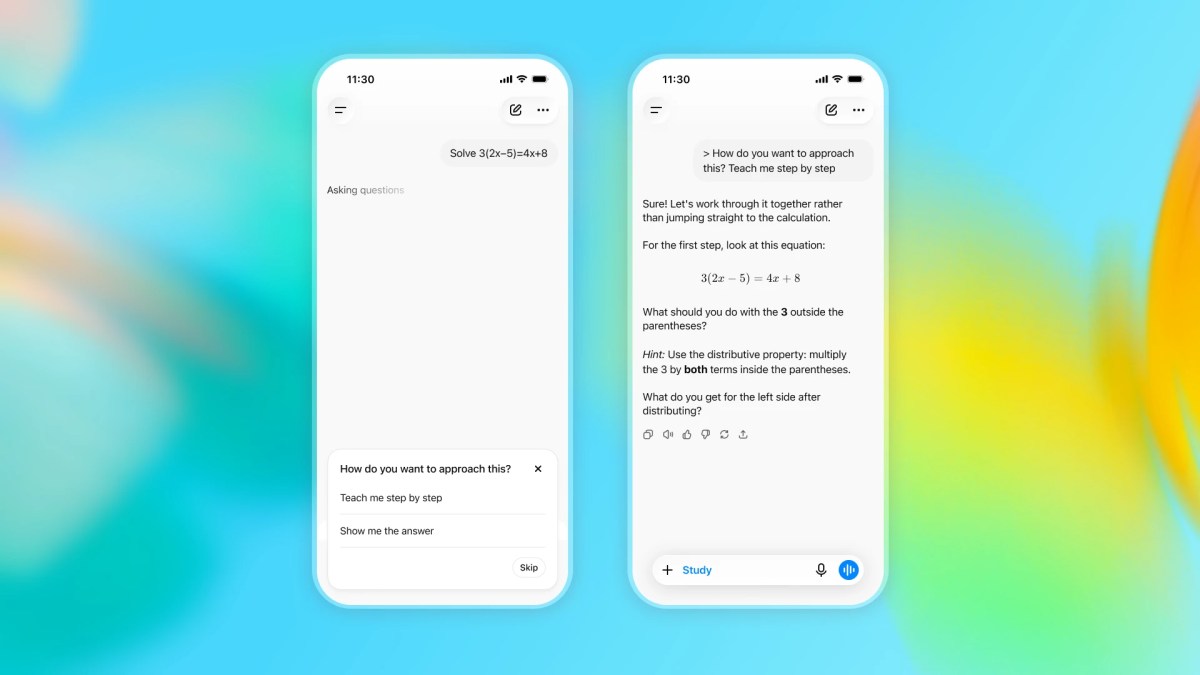
The teen-focused experience introduces a Study Mode that provides guiding questions and step-by-step support so users work through material rather than simply receiving quick answers.
When OpenAI’s systems detect that a teen appears to be trying to cheat instead of understanding the material, the app will show homework reminders and nudge the user to switch to Study Mode.
It also supports quizzes, learning visualizations, and controls that let parents or guardians decide whether Study Mode is enabled by default.
OpenAI says app-appropriate protections will be on by default to reduce exposure to harmful or developmentally inappropriate content, and that these protections are based on its Under-18 Principles in the Model Spec, which the company says were informed by developmental science and expert guidance.
Parental controls previously introduced include the ability to manage settings, receive safety notifications, and set Quiet Hours.
The company also announced a partnership with CodeAI to help teens learn more about AI, including how it works, how to direct or question it, and how to use it.
For classrooms, OpenAI continues to offer ChatGPT for Teachers, which provides institution-managed access to AI.
The article notes that it remains unclear how difficult it will be for teens to work around these systems, given that teens are often adept at bypassing parental controls and locked-down digital experiences.
Until the teen mode is subjected to more strenuous testing, the real-world effectiveness of the safety measures remains an open question.