OpenAI Accelerates Physical-World Engineering with GPT-6 Astra
OpenAI is extending its frontier models into physical-world engineering, covering mechanical and electrical design, simulation, and end-to-end system design. Engineers must combine mechanical designs, electronics, software, and manufacturing requirements across specialized tools, and OpenAI is teaching models to support that work—from preparing drawings and setting up simulations to coordinating changes across disciplines. Over the past year, improved frontier model capabilities have helped OpenAI‘s internal teams test ideas and iterate faster, with early evidence of gains in professional workflows in industry.
To stress-test multimodal and computer-use workflows, OpenAI used GPT-6 Astra to create a device with no direct human edits. GPT-6 defined functional requirements and designed the enclosure, printed circuit board (PCB), and software integrations for a device users can use to talk to Codex. Astra produced the aesthetics, mechanical enclosure and internal structures, electrical component selection and PCB layout, and UI/UX plus firmware and software. Two team members completed the design in under a week as a side project, and a contract manufacturer built a small batch of prototypes in under a month. Getting the device ready for manufacturing still required several rounds of review and iteration: Astra did not consistently account for the manufacturer’s production limits, tolerances, or assembly details.
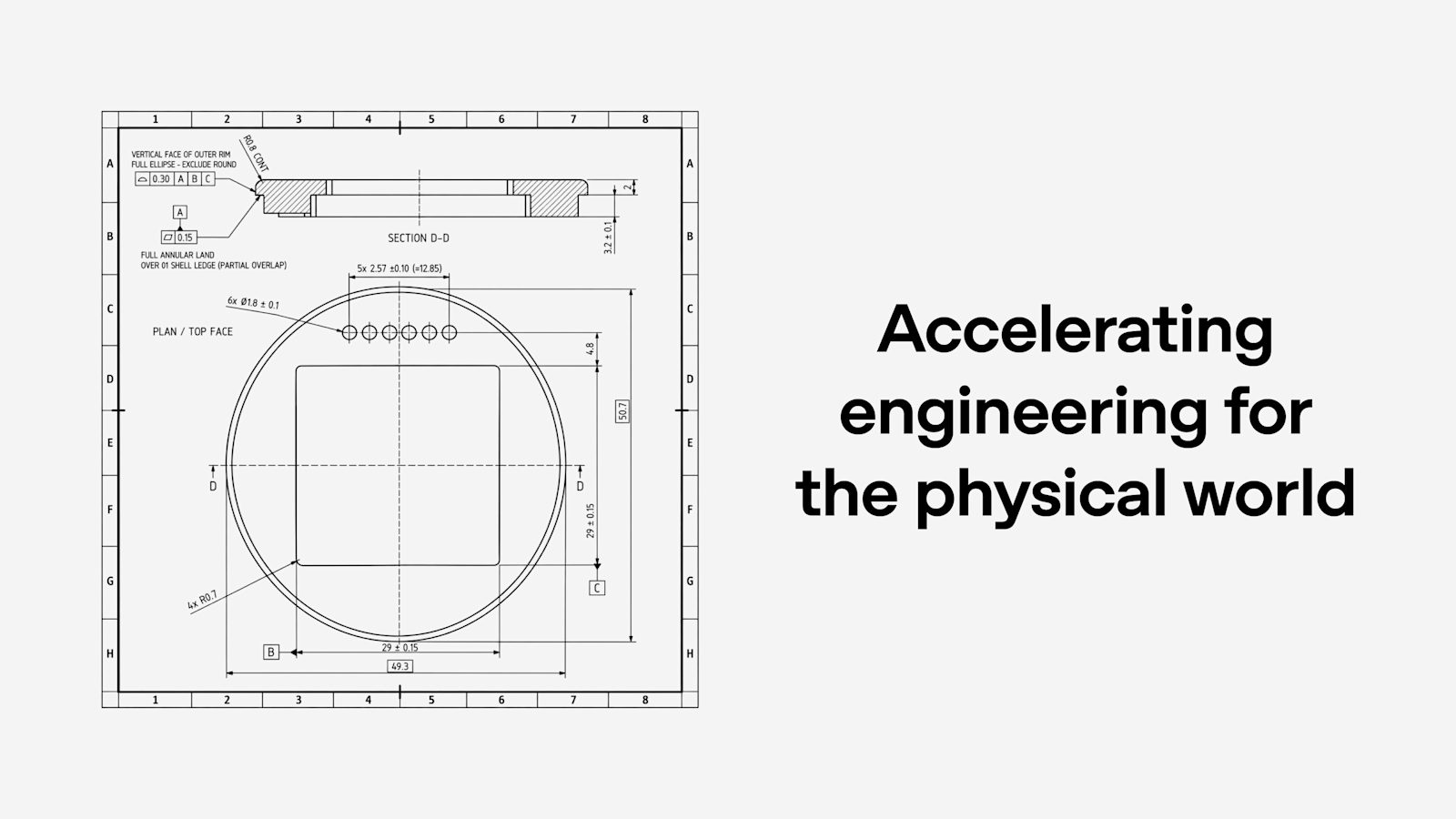
OpenAI‘s hardware and infrastructure teams use Codex and ChatGPT to create and revise CAD models, prepare manufacturing drawings, set up simulations, and review designs across robotics and compute infrastructure. Since February, model usage across these hardware teams, measured in tokens, has grown 23-fold. To measure progress on tasks that combine coding with engineering knowledge, OpenAI uses BenchCAD 2.0, which tests whether models can reconstruct 3D parts and assemblies and identify connections in circuit boards. A newer internal model achieved an average score of 0.875, compared with 0.594 for GPT-6 Astra at its highest reasoning setting. OpenAI notes the engineering lifecycle includes many other elements beyond design, but views these improvements as early evidence of AI’s ability to positively impact iteration speed for professional workflows.
OpenAI is working with a small group of industry collaborators whose engineers review model outputs for accuracy and practical use. It is expanding its collaboration with Chip Ganassi Racing (CGR): with CGR’s R&D team, OpenAI is testing workflows that turn 3D scans of existing parts into editable CAD models and 2D manufacturing drawings, especially when original design files are unavailable. CGR engineers review the models and drawings for accuracy and manufacturability. OpenAI also announced a new research collaboration with Mazda, in which its research and Forward Deployed Engineering teams work with Mazda‘s aerodynamics and crash-safety engineers. The work uses simulations of airflow and structural behavior to explore performance improvements while accounting for styling and cost. GPT-6 Astra helps Mazda‘s aerodynamics engineers explore drag reduction by modeling new nose shapes, simulating airflow, and refining the most promising designs.
OpenAI is now looking for collaborators—engineers, engineering firms, and software vendors—to help shape the training and development of its frontier models by identifying high-value use cases, software tooling, or future opportunities in mechanical engineering, electrical engineering, electromechanical design, mechatronics, or related fields. Feedback from partners is meant to clarify what models can support today and what must improve for safe and reliable deployment.