Google Labs launches Playground, an AI-powered game creation platform
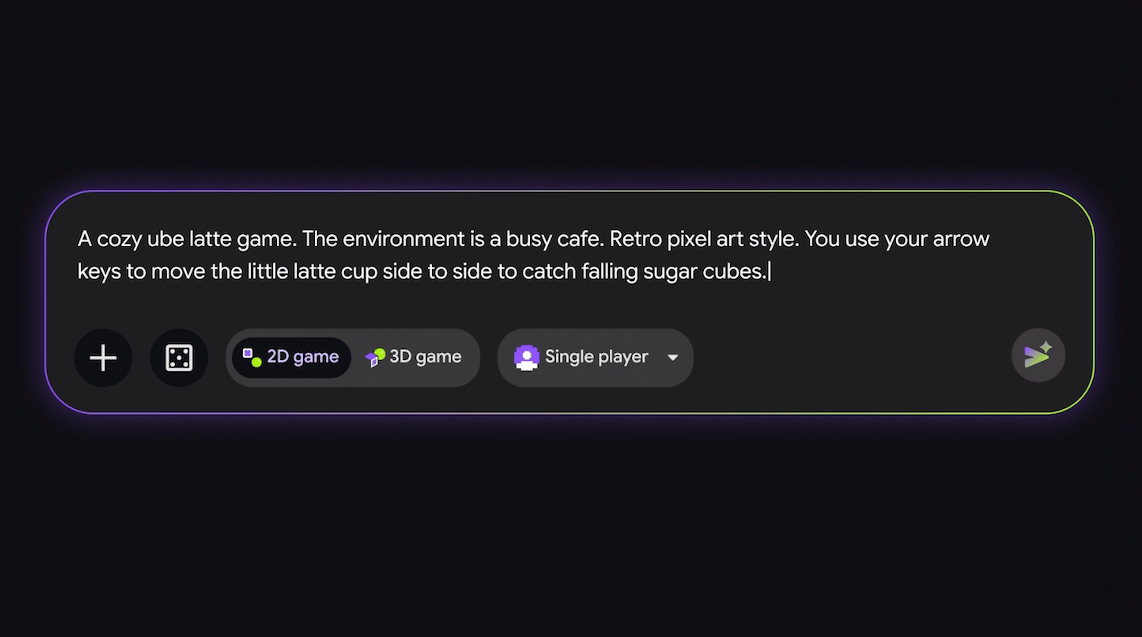
On Wednesday, Google Labs launched Playground, an AI-powered game-creation platform that lets people build browser-based games from simple text prompts without coding expertise. The tool is designed to lower the barrier to game creation for people without traditional programming, design, or illustration skills. Users start by selecting a genre such as trivia or racing, or from a blank project. They can choose between 2D and 3D, and between single-player and multiplayer, then describe the mechanics, gameplay, and visual style. Playground also accepts uploaded visuals, which its AI can turn into game assets matched to the game’s art style.
Games created in Playground run on both mobile devices and computers. Projects can stay private, be shared through a link, or be published to Playground’s Explore gallery. Published games can support features such as leaderboards, and creators can keep modifying projects even after they have been released.
Google said it plans to add Unity Spark integration in a future update, which could give Playground users access to additional 3D capabilities and “professional-level” game mechanics through Unity’s technology. Playground is initially available in the U.S. to users aged 18 and older, with Google planning to expand availability to additional countries. Browsing and playing games in the catalog is free, while game generation relies on a weekly token system. The free tier provides a limited number of tokens, and Google One AI subscribers receive higher usage limits.
The launch puts Playground in a growing market of AI-assisted game-development tools. The article notes that Roblox announced its own Build feature in July, enabling users to create games through natural-language prompts. It also follows Google’s broader interest in gaming, including its earlier cloud-gaming effort Stadia and its current YouTube Playables hub for instantly playable web-based games.