Google brings Dreambeans to India with 13 local languages
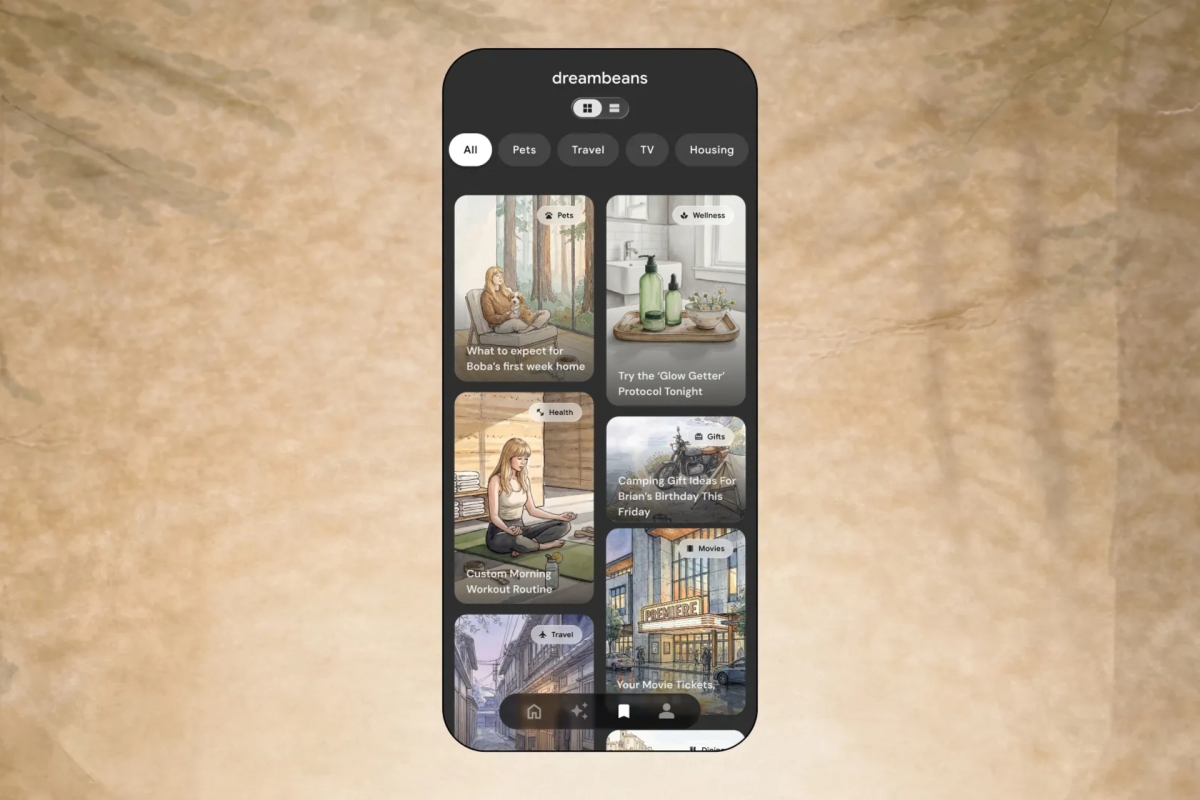
Google has launched Dreambeans, its experimental AI app for personalized visual stories, in India — its first market outside the U.S. The expansion, announced Monday, makes the app available on Android and iOS in India with support for 13 local languages including Hindi, Punjabi, Tamil, Telugu, and Bengali, alongside English. The launch comes less than two months after Dreambeans became available to all eligible U.S. users aged 18 and older. Dreambeans uses information from connected Google services such as Calendar, Gemini, Gmail, Photos, Search, and YouTube to proactively generate illustrated stories about users’ interests and daily lives, without requiring a prompt. Google recently added a feature that uses its Veo video-generation model to animate images in select stories.
Google said it chose India because of strong user interest and the widespread use of its services there, noting that India stands out for its high overlap of users across Gemini, Gmail, and Google Photos. Sensor Tower estimates cited by TechCrunch show Dreambeans recorded nearly 55,000 downloads in the U.S. since its June debut, with about 63% of those coming in September when access opened to all eligible U.S. adults. Downloads dropped 84% month over month to about 5,500 in October. In the first 30 days after the U.S. expansion, Dreambeans saw an estimated 29,000 downloads, compared with 7.4 million for Meta’s Muse, 2.8 million for ChatGPT, 362,000 for Grok Bot, and 155,000 for Claude in their respective first 30 days. Unlike those general-purpose AI apps, Dreambeans focuses on generating personalized stories rather than handling broad queries.
The app has limitations: users can select only one language at a time for generated stories, and while it can draw on information across Google services in multiple languages, it cannot currently mix languages. That could limit appeal in India, where many people switch between languages, including Hindi and English mixed as Hinglish. Privacy concerns are also central. Dreambeans uses Google’s Personal Intelligence technology to draw on connected services, which may contain sensitive personal information. Users can choose which services to connect, disconnect them at any time, delete Dreambeans data, and avoid certain subjects, including business-related information. Google states that information deleted from underlying connected services is also removed from Dreambeans‘ personalization system. The app is available only to personal Gmail account holders, not enterprise users, and stories are visible only to the account holder.
The proactive approach also risks surfacing upsetting memories, such as stories involving people who have died. Google product manager Gozde Oznur acknowledged this, comparing controls to Google Photos memory limits. Oznur added that Google is exploring ways to make Dreambeans more actionable, moving beyond stories and recommendations to help users act on suggestions.