Astra and Opus Crack Unsolved Enigma Messages
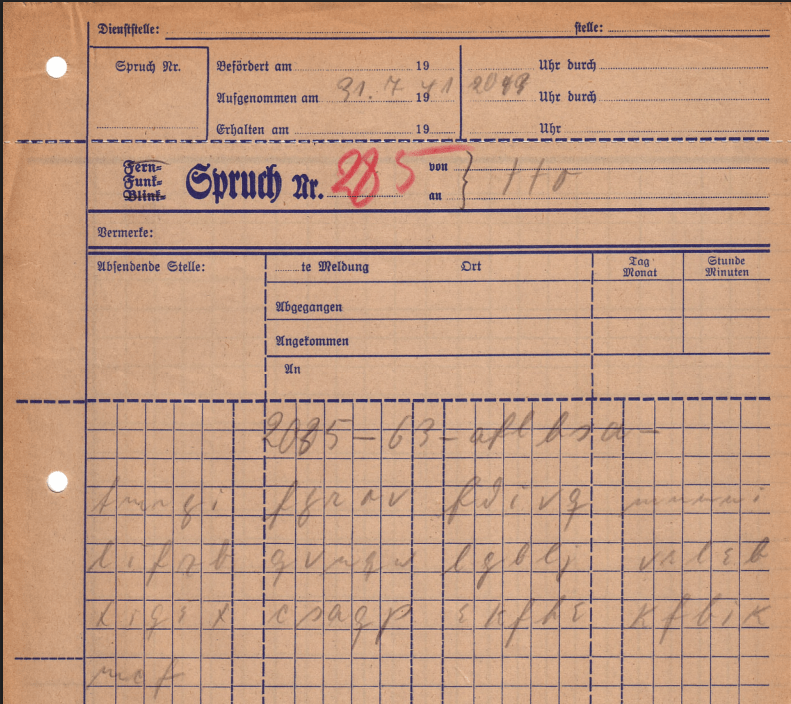
Alan Turing is famous for the Turing test, but his more consequential work involved cracking the Enigma cipher during World War II. While his Bombe machine allowed the UK to read many German messages, a handful of archival Enigma messages remained unbroken, often because of transcription errors by the original operators. Now, two cryptanalysts have used modern LLMs to crack two of these long-standing puzzles.
Carter Leffen, a developer, gave OpenAI’s newest model, Astra, a simple instruction: search a database of Enigma messages for an unbroken message and decode it. The model performed its own archival research, found context clues, built a simulator of the Enigma machine, and recovered the plaintext of a message that had resisted researchers since 2005. Leffen even used Astra to build an interactive website explaining the problem and solution.
Frode Weirerud, a retired electrical engineer who maintains the Crypto Cellar website and its database of Enigma messages, validated Leffen’s solution last week. He described being in “awe” of the result. Weirerud noted that Astra’s logs included discussion of archived messages in a “private collection” not hosted by him, and he speculated that the model might have accessed the German government’s public archives. He wrote that Astra behaved like a very professional cryptanalyst and archive researcher, achieving in two days what would take a human weeks or months.
On September 21, another cryptanalyst, Jack Willis, reported to Weirerud that he had used Anthropic’s Claude Opus 5 to break a different unsolved message. Willis provided significantly more guidance to Claude, which ultimately used the known signature of a particular officer’s name to break the code.
Weirerud notes that there are now just seven unbroken Enigma messages remaining, plus one message where the plaintext is known but the code remains unbroken. Given the demonstrated capability of these LLMs, it may not be long before those are solved as well.
The article is from TechCrunch, written by Tim Fernholz, and highlights how AI agents can autonomously perform complex historical research and cryptanalysis. It also raises questions about the models’ ability to access and reason over archival data, as well as the potential for such tools to accelerate scholarly work.