AI Worldviews Mapped: Training and Alignment Shape Values More Than Lab Origin
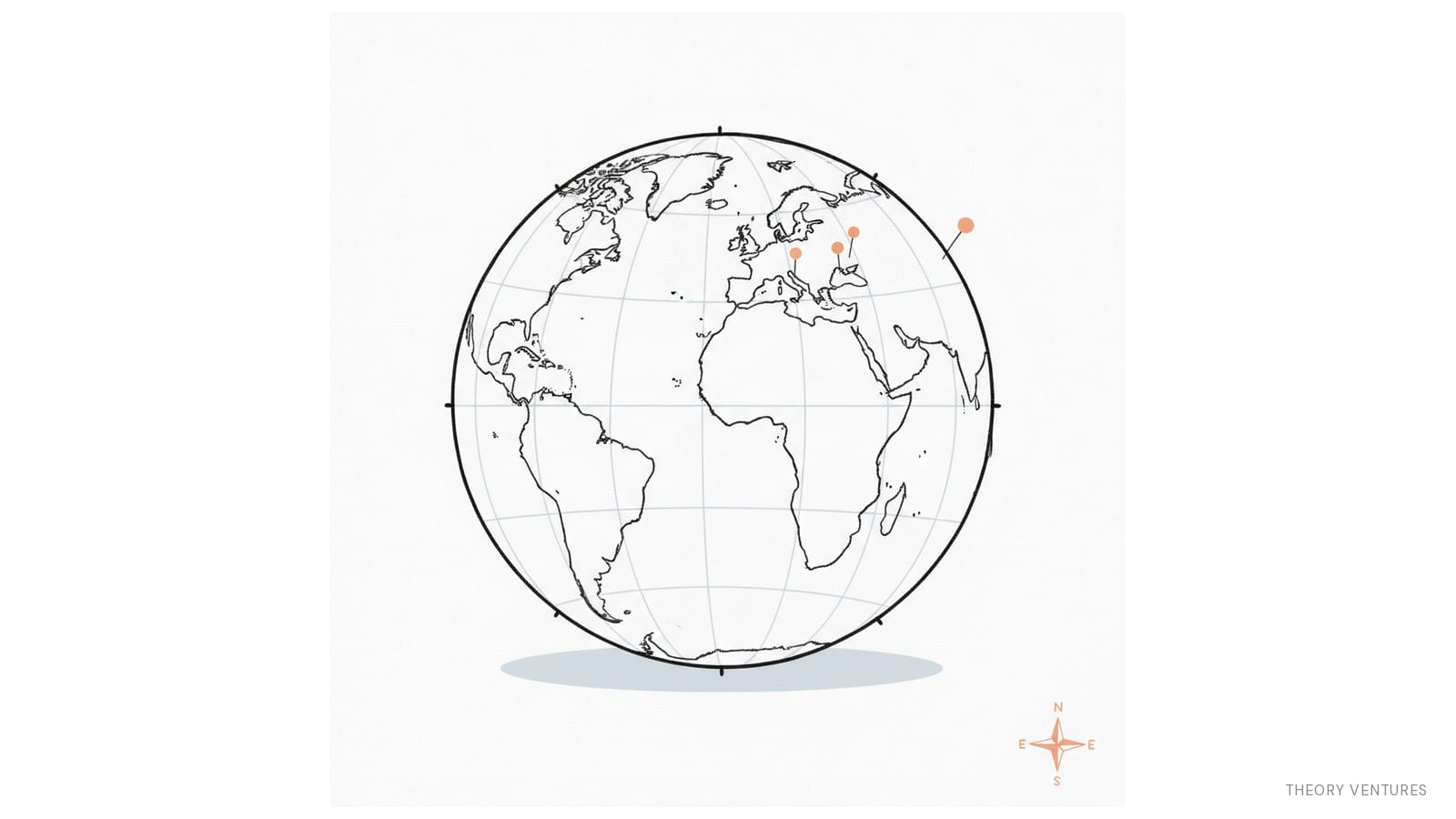
The Economist administered the World Values Survey—a questionnaire mapping moral beliefs across 100 countries since 1981—to 25 frontier AI models, producing a 2×2 chart with axes from traditional (religious) to secular, and from survival (collective basic needs) to self-expression and individualism. Most models sit in the self-expression half, likely reflecting the dominant character of their training data, but they are far apart. Gemini 3.1 Flash Lite and Qwen 3.6 Flash are neighbors, highest in self-expression. GPT-4o and DeepSeek R1 are near-twins despite being trained in San Francisco and Hangzhou respectively. DeepSeek R1 and DeepSeek V4 Flash come from the same lab but sit at opposite ends of the secular/traditional axis. Shared training data and similar labelers explain the near-twins; different post-training choices explain the strangers. Common Crawl is 46% English, so the base voice a model imitates is college-educated American online. Anthropic then aligns Claude to principles from the UN Declaration of Human Rights, a liberal document. Grok sits alone as a traditional independent.
This variance has practical implications for procurement. Enterprise RFPs currently score price, latency, context window, and benchmarks—worldview is absent. For code generation, SQL, log parsing, and image classification, worldview does not matter because a computer program has no politics. But when a model is used for business decisions in a specific market—marketing copy, predictions of user behavior, customer support tone—its worldview becomes a live input that must match the target demographic’s values. The article concludes that AI worldviews have never been a procurement consideration but may need to become one for certain use cases.