42AI Exits Stealth with $62.5M for Behavioral World Model
42AI, an Israeli startup, has come out of stealth with $62.5 million in seed funding and a claim that its “behavioral world model” can predict what a person will do before they consciously decide, even in a new situation. The company is initially running the system at a handful of financial brokerages, where it says the model can predict how individual traders will respond to volatile conditions. CEO Amit Gal-Or describes behavior as “constantly probabilistic” and argues that people have underlying psychological tendencies that persist even as circumstances change. The model outputs probabilities for a person making a certain decision, rather than a deterministic yes/no.
42AI says it tries to infer internal motivations rather than extrapolate from past actions. It examines how people react to seemingly unrelated events — completing KYC, onboarding, support calls, money transfers, and stock trades — looking at sentiment, voice, interaction counts, and buy/sell timing. These observations are converted into mathematical trait representations and fed into a transformer-based world model that lays out possible decisions under different circumstances; a separate language model generates explanations for predictions. Training preserves underlying tendencies: if a normally risk-averse person is treated as a risk-taker in simulation, the target is off. The approach was developed over three years with input from psychology, neuroscience, genetics, experts in psychology and PTSD, and Nobel laureate Dan Shechtman. The team first studied thousands of people via assessments and scenarios, then added government and biobank datasets covering more than two million people; customer datasets now cover almost 30 million people.
In live deployments, 42AI analyzes customers’ existing records, including transactions and support calls. Gal-Or says the system does not need personally identifiable information and “the model never knows who the person is,” although the company does create individual behavioral profiles from linked customer activity. For market trades, 42AI reports 98% accuracy, but Gal-Or clarified that this measures whether trading flows fall within a predicted range, not whether each trade was predicted exactly. The company also says it consistently achieves an F1 score of 0.8 to 0.85 for predicting trading direction and volume. Gal-Or acknowledges a natural ceiling: the model does not have access to everything a person experiences, and accuracy drops when important context is missing, such as a trader changing choices based on advice from a friend.
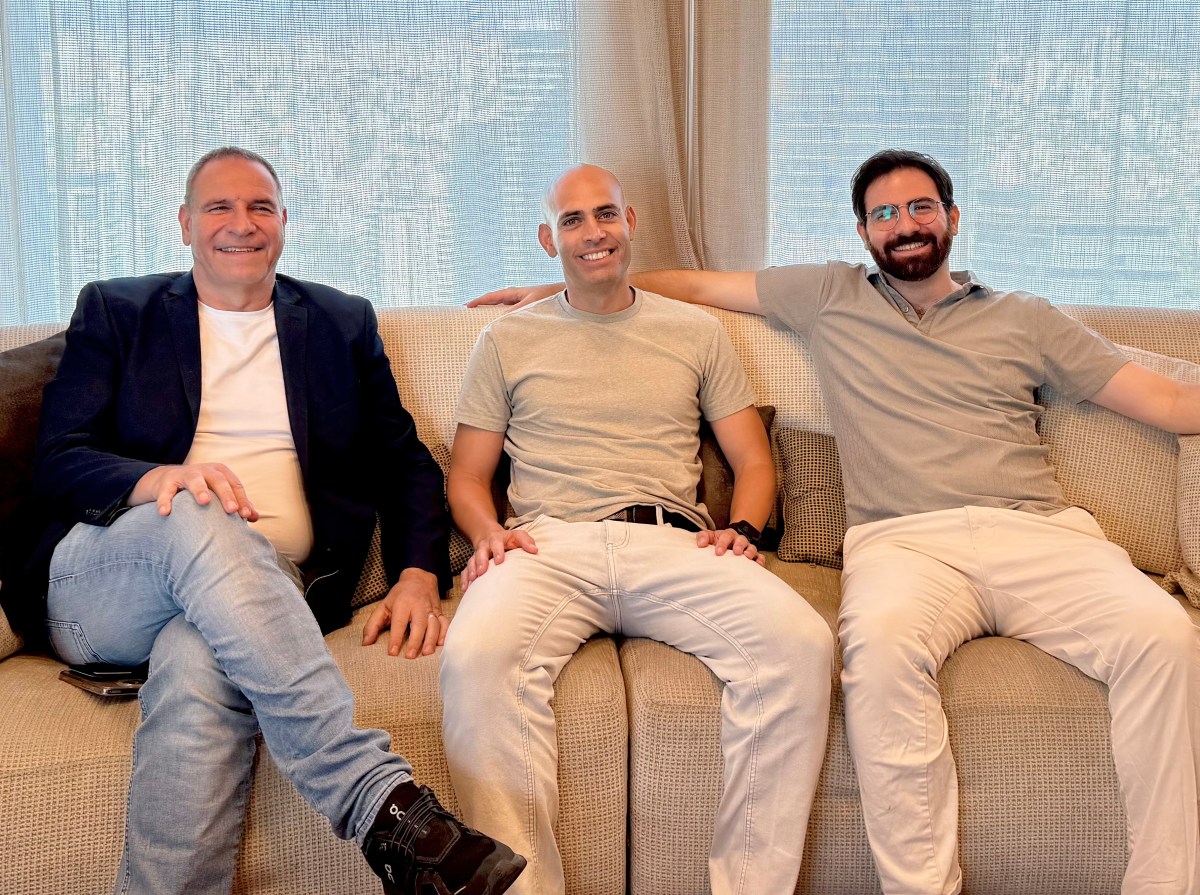
42AI is working with 10 large brokerages, which use the model to manage liquidity, margin requirements, and hedging exposure. The company is onboarding more customers and is generating more than “seven figures” in revenue, though Gal-Or wouldn’t specify a number. Customers pay a flat fee or a percentage of the value the platform helps them gain, and he claimed one brokerage generated approximately $30 million in additional value through dynamic hedging. The $62.5 million seed funding came from the founders and Infinity Group over three years, not entirely from external investors; Infinity was founded by Gal-Or’s father, Amir Gal-Or, who is 42AI’s chairman and co-founder. 42AI plans to raise more money and is exploring gaming, fraud prevention, and cybersecurity, with a longer-term ambition to help robots and AI agents understand people. Ezra acknowledged that the model needs to be trained on rules and context for each new domain.
Asked about the risk that a brokerage could use the predictions against customers, Ezra called it “a valid concern.” The founders pointed to regulations, monitoring, and an internal ethics committee, but did not explain what would stop customers from using the technology to gain an advantage over the people it profiles. Gal-Or insisted the technology could help address such risks: “We are very proud that actually we are part of the solution; we are the solution to this problem.”