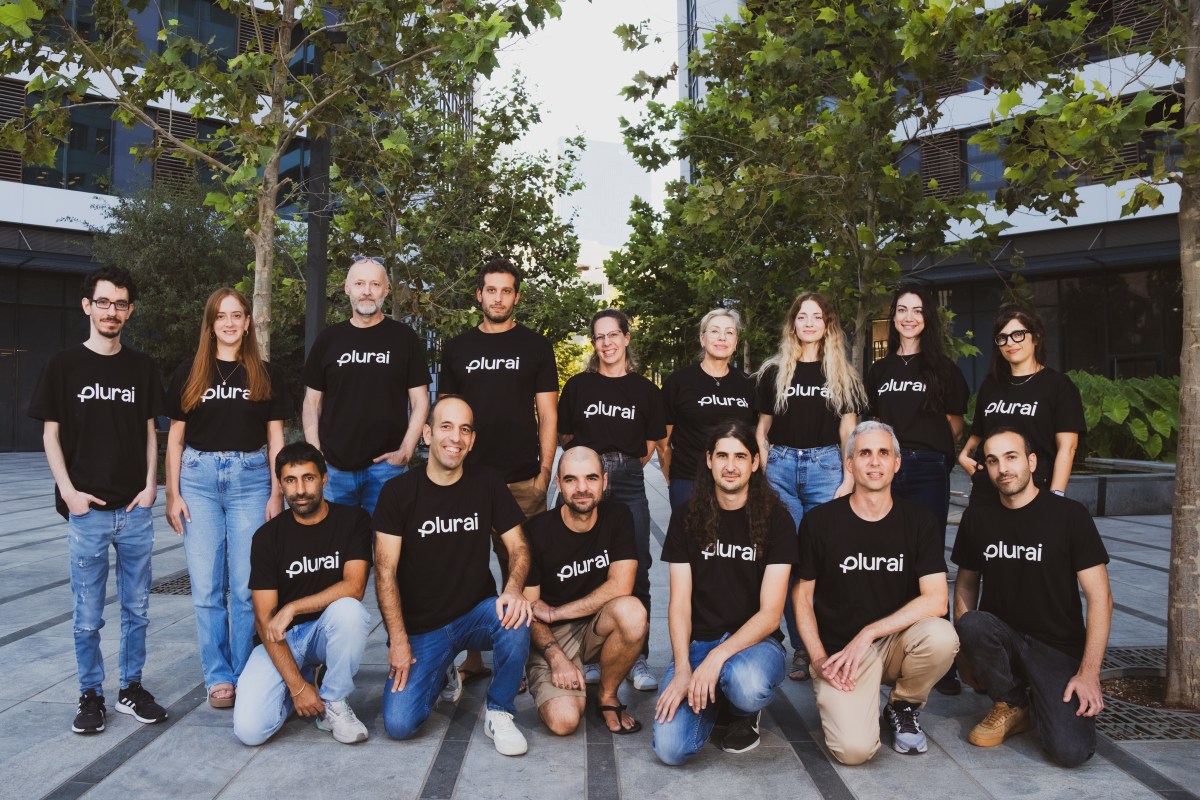
Plurai raises $13M to make AI agents more reliable with digital twin simulations
AI agents are popular but not yet reliable enough to run without close supervision in complex work. Plurai, a startup founded by Ilan Kadar and Elad Levi, applies simulation techniques from self-driving cars to improve them. The context is supported by benchmark data: on LiveBench 2.0, Claude Fable 5.2 and ChatGPT-6 Astra succeeded on 82.9 and 75.6 out of 100 tasks respectively, while AI infrastructure company EON’s simulated corporate environment found Claude Opus 4.8 performing tasks at 76.8% accuracy.
Kadar previously worked with Waymo to simulate and evaluate its end-to-end deep learning driving software; Levi and Kadar also worked at Nexar, which develops autonomous driving technology. They saw the same pattern in AI agents: demos are easy, but reliability and cost-effectiveness are hard. Plurai creates a digital twin of a company’s electronic systems, including the knowledge base and tools an agent will have access to in production. It maps all possible agent flows and uses that graph to evaluate and fix edge cases. The platform works alongside existing agentic tools like Claude Code, Codex, Copilot and Cursor.
The failure modes Plurai targets include agents booking travel while ignoring spending policies, reliably answering from one database but failing when combining multiple data sets, and long customer-service conversations overwhelming an agent with too much context. Using synthetic data based on the company’s own systems, Plurai prepares models for these edge cases. On Wednesday the startup announced $13 million in seed funding, led by Team8, with participation from U&I, Velocity and Mercer.
The company’s larger promise is to use the gathered data to post-train small, open-weight models tailored to specific customers. Tests conducted with Nvidia and Nebius showed Plurai‘s models outperforming mid-tier frontier models at lower costs. Kadar says the process can decompose a task into a smaller task using simulation, train an open-weight model, and then verify via simulation that quality is higher or comparable to a frontier model at one or two orders of magnitude cost reduction. Google DeepMind researcher and angel investor Reah Miyara adds that Plurai‘s edge is understanding production failure modes and generating synthetic data to tune models; IT leaders are finding frontier-capable models are out of distribution with their specific data and the cost isn’t sustainable long term.
Kadar’s concluding argument is that no matter how smart OpenAI and Anthropic models become, they will not know a customer’s business and policy. The article frames this as an analogy to physical robots: general AI models are not yet reliable enough for wide deployment, while robots powered by task-specific models are already in the field gathering real-world data.