Disrupt 2026 Breakout Sessions: AI Agents, Inference Economy, and Physical AI
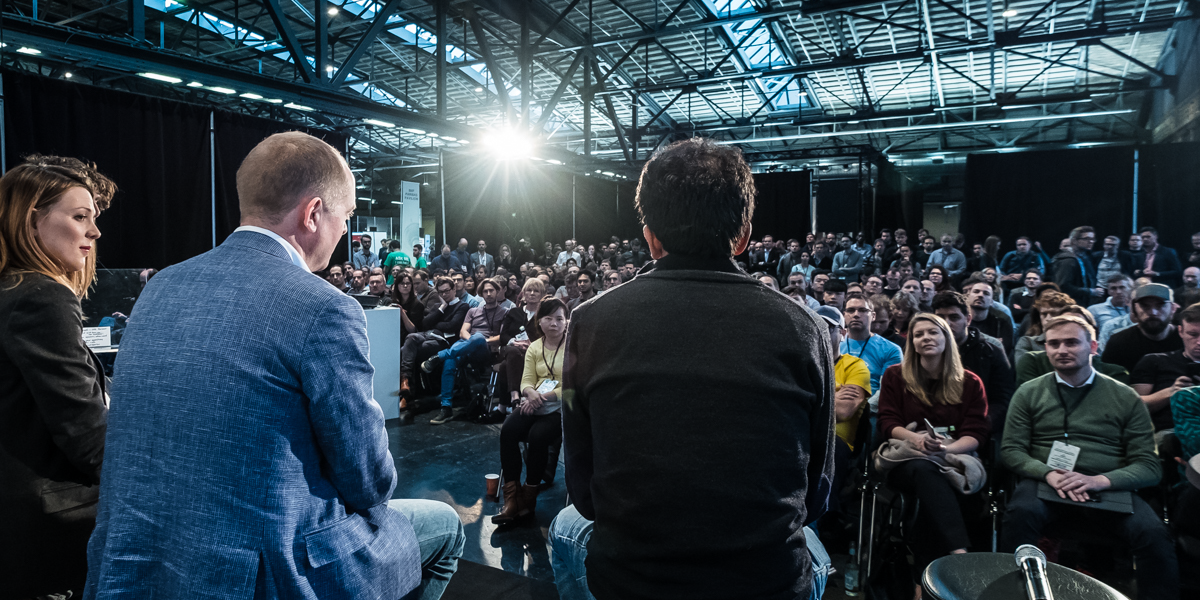
TechCrunch Disrupt 2026 will take place October 13–15 at Moscone West in San Francisco, gathering more than 10,000 founders, investors, operators, and tech leaders. The breakout session agenda is designed for deeper, practical conversations: each 50-minute session pairs expert insight with audience Q&A, and attendance is first come, first served with limited capacity. The lineup addresses how to build with AI agents, where value accrues as AI shifts from training to inference, what physical AI means, how to run a fundraiser, and how AI changes company and team growth.
Several sessions focus on AI agents and trust. Anthropic technical staff Steve Androulakis and Sachin Malhotra will show how they run multiple Claude agents in parallel, delegate engineering work, review output, and recover from agent mistakes. Robbie Goldfarb of Forum AI will discuss how expert human judgment can become scalable evaluations for building trustworthy AI, drawing on experience in misinformation, online safety, and foundation-model labs.
The inference economy is a central theme. Hagay Lupesko (Cerebras Systems) and Rudina Seseri (Glasswing Ventures) will examine how AI economics shift from training to inference as frontier models commoditize, where defensibility comes from when the model isn’t the moat, why latency is part of the product, and what that means for infrastructure decisions, startup economics, and investor priorities.
Physical AI appears in two sessions. Susan Schofer and Duncan Turner of SOSV HAX will define what qualifies as physical AI, why building it requires a different playbook, and what investors seek in category-defining companies. Ethan Batraski (Venrock), Ivan Poupyrev (Archetype AI), and Ian Rountree (Cantos) will argue that physical AI is an execution problem: the opportunity lies in reliably closing the loop between perception, decision, action, and verification, which could produce durable industrial AI businesses.
A session on building companies spans AI, data, entrepreneurship, and strategy with Dr. Rumman Chowdhury (Humane Intelligence), Payal Kadakia (ClassPass), Cassie Kozyrkov (Kozyr), and Holly Ransom (Emergent). They will explore how founders can use AI to make better decisions and move faster while recognizing where bias, judgment, and human elements still matter.
Fundraising gets two dedicated sessions. A Fidelity Private Shares-sponsored interactive session will cover investor targeting, relationship building, outreach, maintaining momentum, cap tables, data rooms, and due diligence from both sides of the table. Another session with Surgicure Technologies, Tampa Bay Wave, General Catalyst, and HealthQuest Capital will focus on mistakes that derail rounds, including positioning, preparation, investor strategy, and execution. Additionally, Bruce K Lee (Keebeck Wealth Management) and Abhi Tiwari (Blank Ventures) will discuss the transition from founder to investor, including why founders should consider post-exit strategy early.
For builders looking at new domains, Dr. Brian Cameron and Shawn Sloan of The Aerospace Corporation, along with Bosco Lai of Little Place Labs, will map AI capabilities such as handling large data streams, autonomous decisions, real-time processing, and complex agent systems to space applications and emerging commercial and government opportunities. Patrick Burke of Hostinger will present lessons from a bootstrapped unicorn on identifying underpriced distribution channels, shortening the loop between market signals and product launches, experimenting faster, and applying agentic marketing workflows.
Finally, Nomi Khedawala of Reddit will discuss talent as the operating system: how leaders can build alignment, spot breakdowns early, and create systems that support accountability and sustainable high performance as teams scale in the AI era.
Disrupt 2026 registration is open, with up to $100 off passes, 50% off a second ticket, group discounts for four or more, and a $75 Expo+ Pass for people recently laid off. The article also notes discounted pricing before doors open, and that purchases through links may earn the publisher a small commission.