Thinking in Systems, Shipping in Loops: AI Leaves Engineers the System Design
The article argues that AI has removed typing from software engineering and left the system design. David Heinemeier Hansson, CTO of 37signals, told Rails World in Austin on 23 September 2026 that writing code by hand is no longer an economically productive enterprise for the vast majority of programmers at the vast majority of companies. “That’s today. By the end of the year, it will be virtually all domains, virtually all programmers, virtually all companies.” The post takes this as the endpoint: software engineering has evolved into systems architecture, and that was always the destination.
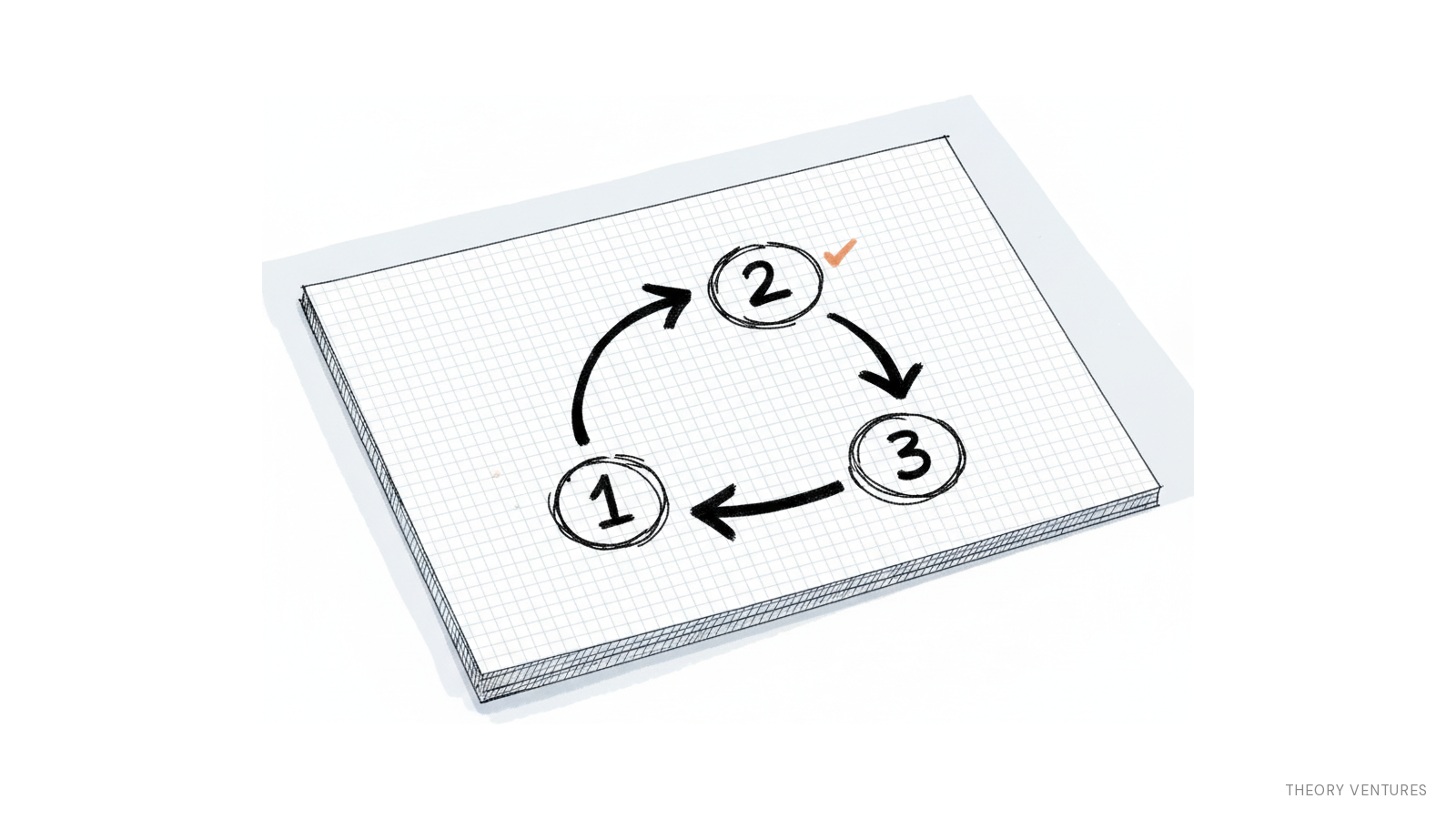
To show what the shifted role looks like in practice, the author cites two examples. Artemis engineers merged 2 pull requests per day in January, 6 by May, and 16 by August, reaching 30,000 pull requests in eight months. CTO Dan Shiebler describes the division of labor plainly: every line of the platform is written by agents, while the engineers design systems, set constraints, and review outputs. On SpaceXAI’s Grok team, Lauren Tan ships 2,000 pull requests a month to production, nearly one hundred per working day. Asked what makes that possible, she does not name a model; she names verification, loops that enable AI to validate its own work.
The author connects this to Dartmouth professor Donella Meadows‘s work on system design. Meadows argued that the most powerful places to intervene in a system are the least intuitive, and that people reliably find them and then turn them the wrong way. The post identifies three properties that define great system design: resilience, self-organization, and hierarchy. Resilience is AI checking its own work robustly through tests, a reviewer agent, and production observability rather than a single gate. Self-organization is the loop learning, so a class of failure becomes a new skill the agent applies next time. Hierarchy is the layering of skills, tools, and sandboxes into composable components that are reused once verified to work.
The post admits this work is not easy. Systems architecture never has been; the author says it was the goal in 2005 as a Java software engineer just as much as it is today while building agentic systems. The new career is described as “a professional maker of things”: you will no longer be chiseling code by hand, but you will be making amazing things and steering intelligence. The piece is aimed at founders and operators, drawing on data-driven insights from the author’s work as a GP at Theory Ventures and former Google PM.