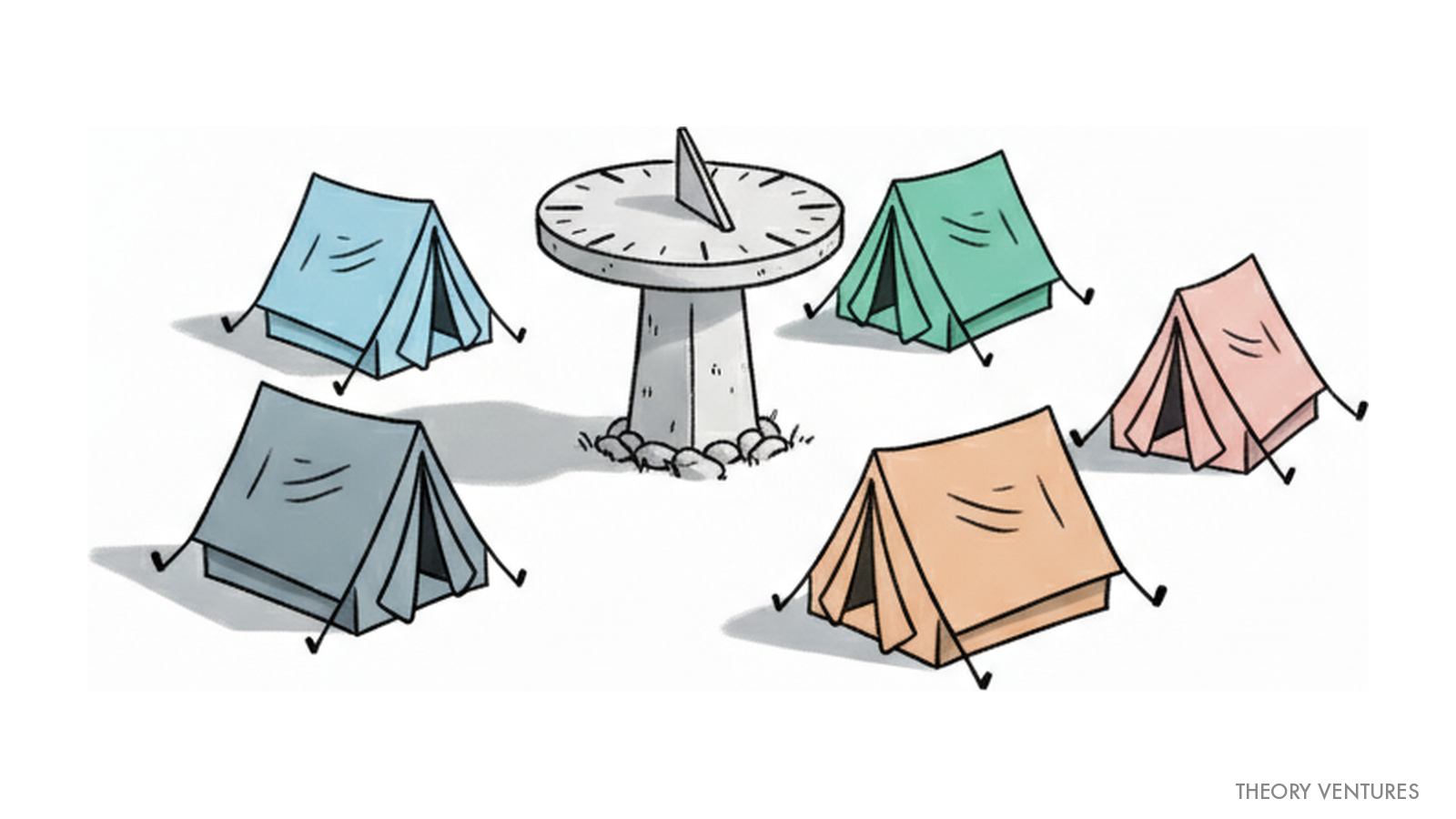
What Does Pacing Mean? Five Camps, No Speed
The article examines what “pacing” means in the AI policy debate, prompted by Dario Amodei‘s call for the industry to pace itself.
It argues that while five distinct camps have weighed in on the consequences of slowing AI development, none has actually defined a concrete speed or mechanism.
The interpretability camp, represented by Anthropic‘s Evan Hubinger, wants time to understand models, citing a >10% chance of catastrophic AI outcomes within a decade and the field’s limited ability to see inside models.
The labor camp, represented by Bernie Sanders‘ proposed moratorium on new AI data center construction, wants time for workers.
The economic camp, including Treasury Secretary Bessent, sees AI-driven GDP growth as the way to grow out of national debt, with Bessent predicting productivity benefits within six months.
The geopolitical camp, echoing Trump’s “whoever wins AI wins,” wants to maintain advantage over China.
The regulatory capture camp, including David Sacks and Lina Khan, wants no new rules, arguing that labs are seeking permission to form a cartel or that existing laws already apply.
The article notes that the only concrete mechanism ever proposed, a 2023 executive order requiring reporting above 10^26 FLOPS, was revoked before any model crossed it and is now obsolete: Grok-3 crossed it weeks later, roughly ten models will clear it this year, and training compute grows about fivefold annually.
It closes by asking whether innovation speed can be controlled with the precision implied by the debate, and who should decide.