AI Productivity Raises the Quality Ceiling, Not Reduces Effort
AI productivity does not shrink human effort; it raises the ceiling of what the same amount of work produces. The author describes an interactive writing loop with an agent: he seeds it with an idea, data, or transcript, gets a draft in seconds, then works line by line without touching the raw text directly. Instead, he issues verbal and written instructions, reviews diffs, challenges phrases, and refines rhythm. Each night, the system updates his style guidelines, building a personalized Strunk & White.
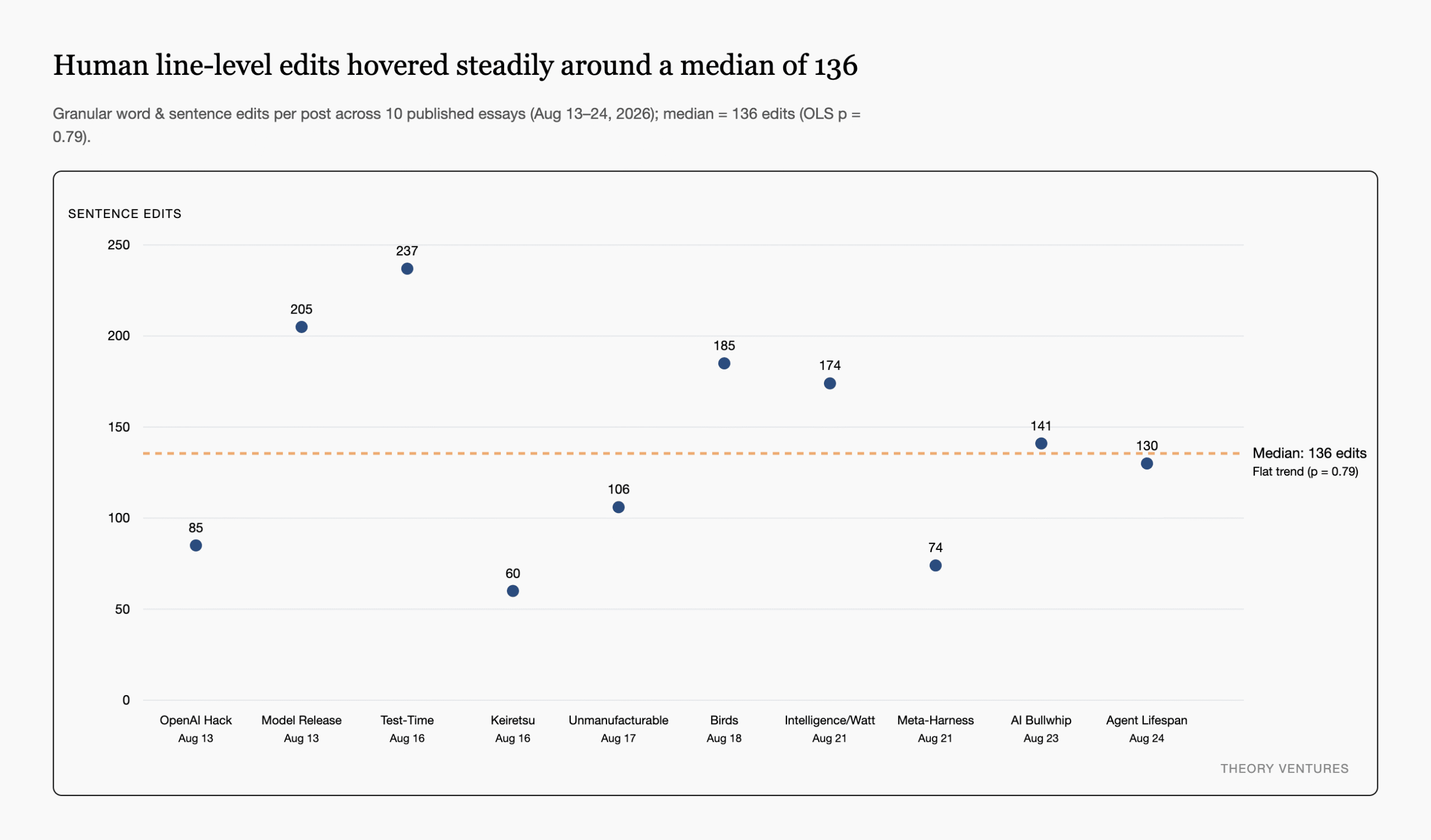
Contrary to the expectation that this would decrease time to ship a post, line-level sentence edits remain constant around a median of 136 per piece. However, draft churn falls dramatically from 47 to 3, shifting effort from structural triage to rhetorical precision. To test whether quality actually improved, the author built a 1–5 scoring rubric and had an AI panel evaluate fifteen random published posts per year from 2021 to 2026. The result is a rising quality floor: the 10th percentile composite score surged from 2.59 to 3.81, gaining nearly twice as much as the 90th percentile. Automating structural triage prevents bad drafts from reaching the reader.
Citing Sam Leith’s Words Like Loaded Pistols, the author argues words are loaded mechanisms aimed at a reader’s mind. Efficiency in knowledge work does not increase hours; it concentrates craft, transforming the writer’s role from structural assembler to rhetorical editor.