Vijay Pande on VZVC, concentrated bets, and AI in biology
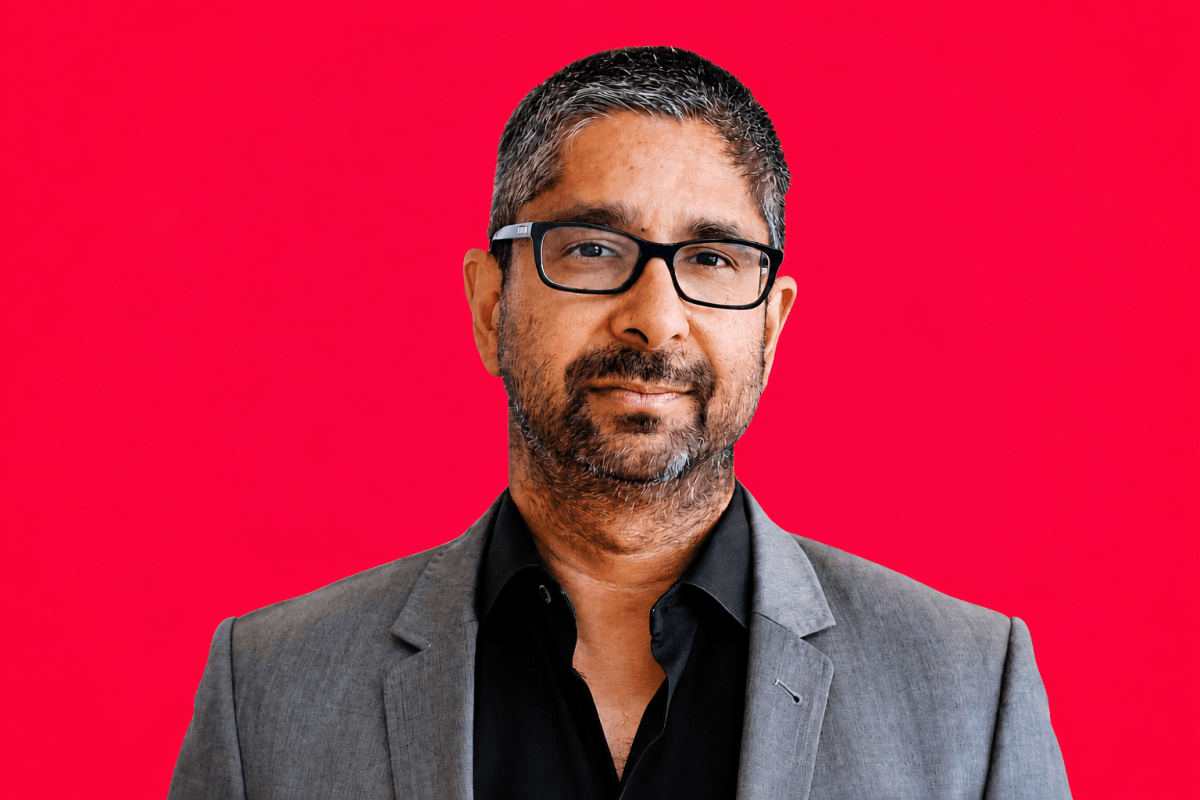
Vijay Pande, who spent more than a decade building a16z‘s healthcare and life sciences practice into a roughly $4 billion operation, left last June to co-found VZVC with Zach Werner. The new firm is intentionally tiny: no associates, heavy reliance on AI agents for daily operations, and only about five concentrated investments per year. Pande explains the pivot as a shift from spraying many bets to making a handful of highly engaged commitments, comparing adding a company at a typical fund to quickly adding a Facebook friend, while at VZVC it is more like deciding to have another child. He says founders and investors make room for them because of the hands-on work he and Werner can provide, rather than competing for hot Series A or B rounds.
Pande grounds his investment thesis in a broader vision: biology is moving from a “science of discovery” to an engineering discipline. AI and machine learning can now identify drug targets, design drugs, and help run clinical trials, which remain the most expensive and failure-prone part of drug development. He notes that only 20% of drugs progress from first trial to end of third trial, and failures often occur because animal models like mice are not predictive of humans. AI models will not be perfect, he argues, but will be “way better than any animal model,” which is where the field becomes exciting. He also connects this to precision medicine: instead of comparing blood test results to population averages, AI can help determine what is weird for an individual, improving the chance that the first drug prescribed is the right one.
Pande sees the recent acceleration as the convergence of several trends: genomics gave a static blueprint, but proteomics and other measurements now capture the body’s current state; robotic automation in measurements pairs naturally with AI; and a decade of steady progress in AI for both biology and chemistry has built a foundation. He is particularly interested in AI for healthcare delivery and AI for clinical trials, two areas he says he focused on heavily at a16z.
A central problem he highlights is that biological data cannot be scraped off the internet the way text can, so companies build walled-off datasets. This creates a different AI dynamic, but Pande believes a shift is underway toward building “atlases of biological information,” often in the form of foundation models. He expects open-source biology foundation models to have a broad impact, just as open-source LLMs have done well against corporate ones. He also sees AI as uniquely able to act as a specialist in everything, potentially syncing insights across fields like oncology and endocrinology in ways human doctors in silos cannot.
On founders, Pande looks for high integrity, people he can trust over five to ten years and ideally across multiple companies, and those who think about winning together rather than just beating others. He cites Antonio Gracias at Valor and Thrive as inspirations for concentrated, long-term investing, while acknowledging a16z remains part of his DNA. Reflecting on his career, he says early resistance to AI in medicine has largely disappeared, and he now emphasizes that go-to-market is at least as hard as the technology itself, a message he pushes to science- and product-side founders.
On what is overhyped, Pande warns against the claim that AI will cure everything. The limitation is not AI but data: LLMs work because of abundant training data, and when the data simply is not there, AI cannot magically solve the problem.