Nvidia’s $500B AI Data Center Plan: Guaranteeing GPU Residual Value
Nvidia announced this week that Apollo, BlackRock, Blackstone, Brookfield, Goldman Sachs, and KKR are willing to commit up to $500 billion to build AI data centers. The more significant story is Nvidia‘s effort to create a secondary market for aging GPUs. To attract these financial companies, Nvidia has agreed to guarantee, with its own money, that its chips used as collateral in these deals will retain their value. Specifically, Nvidia will cover up to 25% of the difference if GPUs used as collateral don’t retain their expected value upon liquidation. This creates ‘wrong way’ risk for Nvidia: its obligations grow as demand weakens, potentially squeezing its revenues.
The comparison to Lucent Technologies has been raised, but Nvidia‘s scheme is different. Unlike Lucent, which lent customers money to buy its equipment, Nvidia is getting others to shoulder the bulk of the capital and risk, merely agreeing to protect a portion of its chips’ future value. CEO Jensen Huang took to X and business TV to explain that Nvidia‘s risk is limited. The plan is deliberately designed to address concerns about circular financing by bringing in independent, long-term institutional capital. This comes after traditional funding methods for AI data centers have worn thin, with hyperscalers like Oracle taking on debt, Google issuing new equity, and Meta burning cash. Microsoft CEO Satya Nadella even recommended the book “1873” about railroad-era financial engineering on his latest earnings call.
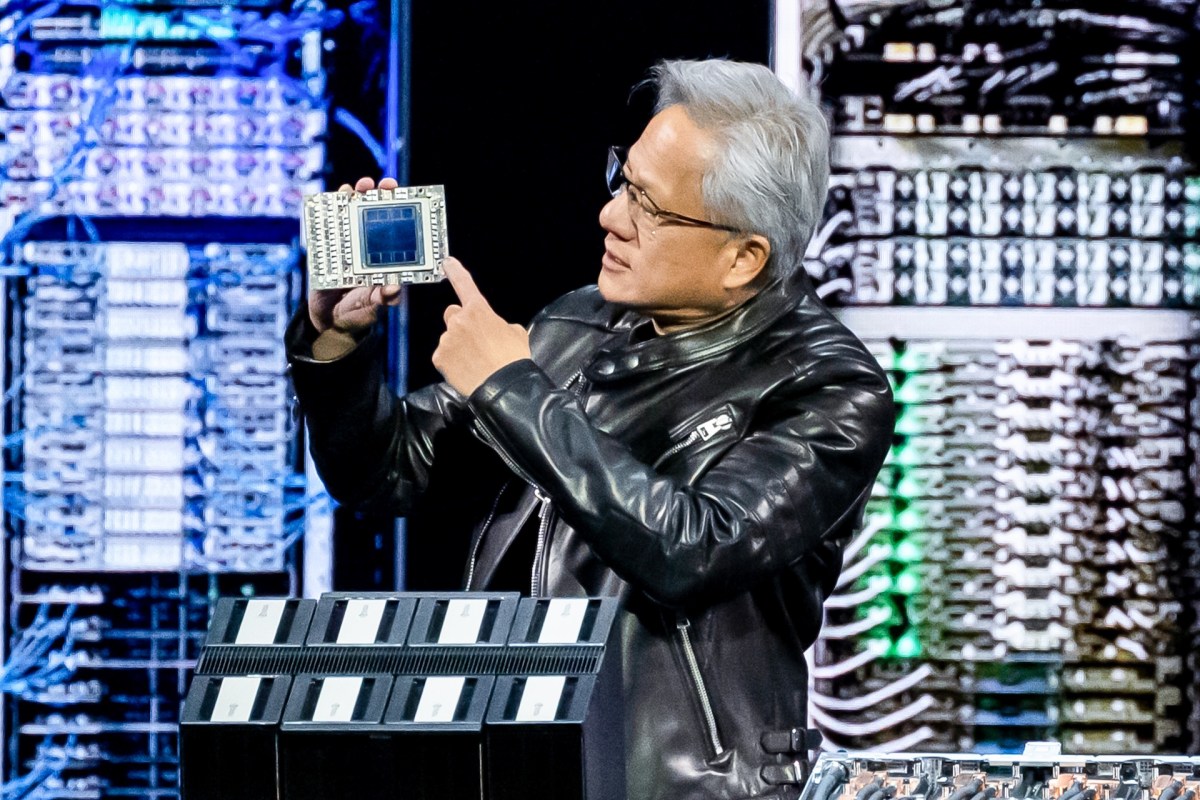
Huang envisions AI servers as ‘AI factories’ akin to railroads or airlines — long-term investable infrastructure that can be repurposed for different customers, clouds, or operators. This would help protect residual value and sustain demand for Nvidia hardware as it ages. For startups and enterprises, this could mean a broader ecosystem of used AI hardware, with different generations of GPUs tuned to different AI needs. Nvidia has already committed billions to frontier AI labs (OpenAI, Anthropic) and neoclouds like CoreWeave, which originated the use of Nvidia chips as collateral. The risk remains that the AI boom doesn’t continue, or that new technologies make existing infrastructure obsolete. But Huang is betting that won’t happen, and Nvidia has the window of opportunity to make this secondary market flourish.