AI whack-a-mole: Discovered Materials hunts cooler chip materials
Chips running AI workloads generate excessive heat, driving high energy consumption and cooling demands in data centers.
Startup Discovered Materials is applying AI to this problem by using swarms of AI agents to discover new materials for more efficient integrated circuits.
The company recently closed a $9 million seed round led by Lightspeed India Partners, with participation from Peak XV Partners and angel investors including Paul Graham, after graduating from Y Combinator.
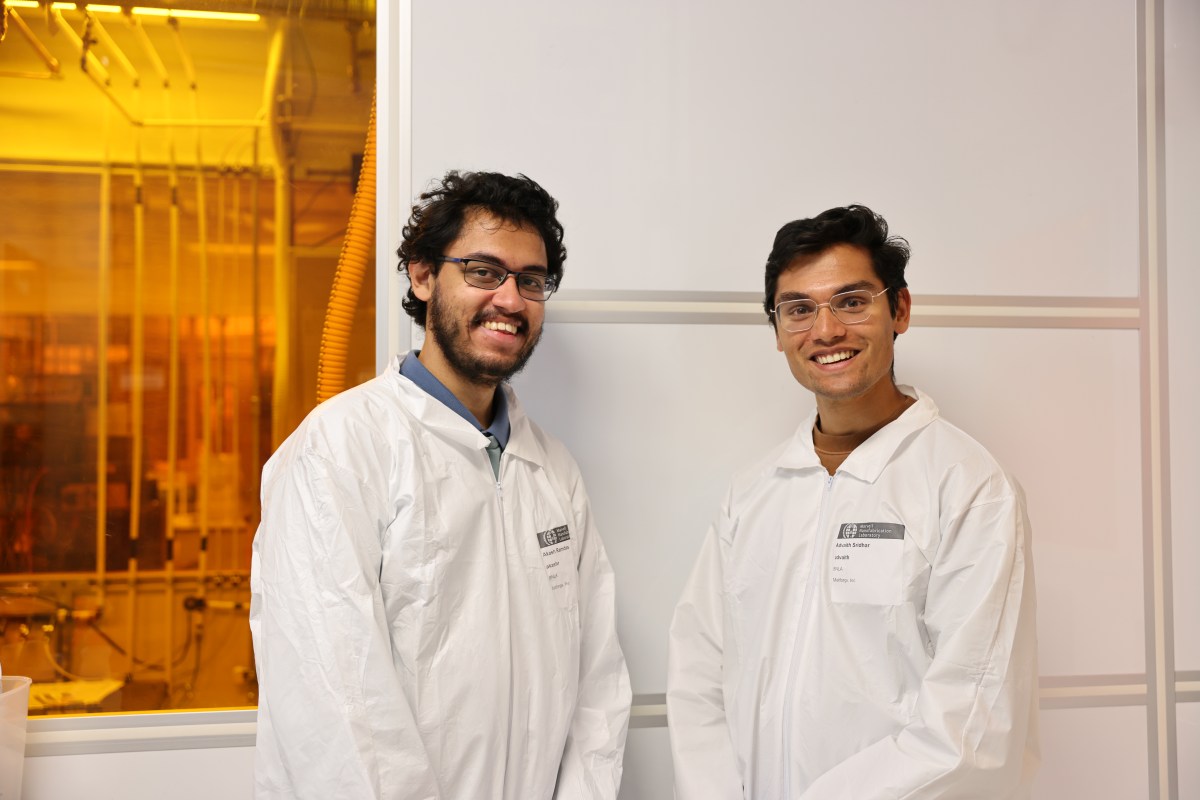
Founders Advaith Sridhar and Akash Ramdas combine experience in AI agents and materials science—Ramdas holds a Stanford PhD in materials science, and Sridhar worked on agents at Persona AI and Luma Labs.
Their pipeline uses Anthropic models in a custom harness to generate material leads, then runs simulations with physics models they trained to verify candidates.
Sridhar says their system can run thousands of guesses per day, compared to Ramdas’ roughly 20 per day during his PhD.
The startup released hundreds of new material examples and a ‘Material Discovery Bench’ to benchmark frontier models on this task.
Key challenges include balancing thermal, electrical, and manufacturability properties; as Lightspeed partner Hemant Mohapatra describes it, ‘a bit of playing whack-a-mole with atomic structures.
‘ Discovered Materials competes with firms like MatNex, SandboxAQ, and CuspAI but focuses specifically on semiconductor thermal problems.
It claims to have discovered materials matching properties of those used by major chipmakers but cannot disclose details.
Mohapatra expects novel-substance prediction will become commoditized; the differentiator is Ramdas’ domain expertise and the ability to rapidly validate candidates in a lab.
The founders plan to patent valuable materials for GPU use or chipmaking processes and license them to manufacturers, hoping to have patent-worthy materials within a year.
However, the article notes that no AI-discovered drugs or materials have yet made commercial impact—the closest example is Insilico Medicine’s drug in Phase II trials, and materials like MatNex’s rare-earth-free magnets have not been deployed at scale.
Mohapatra believes filtering and synthesis, not candidate discovery, is the bottleneck.
Sridhar acknowledges that wet-lab work cannot be sped up, but argues that their unique data and expertise will help compete with larger labs.