Thinking Machines Lab Releases Open-Weight Model Inkling
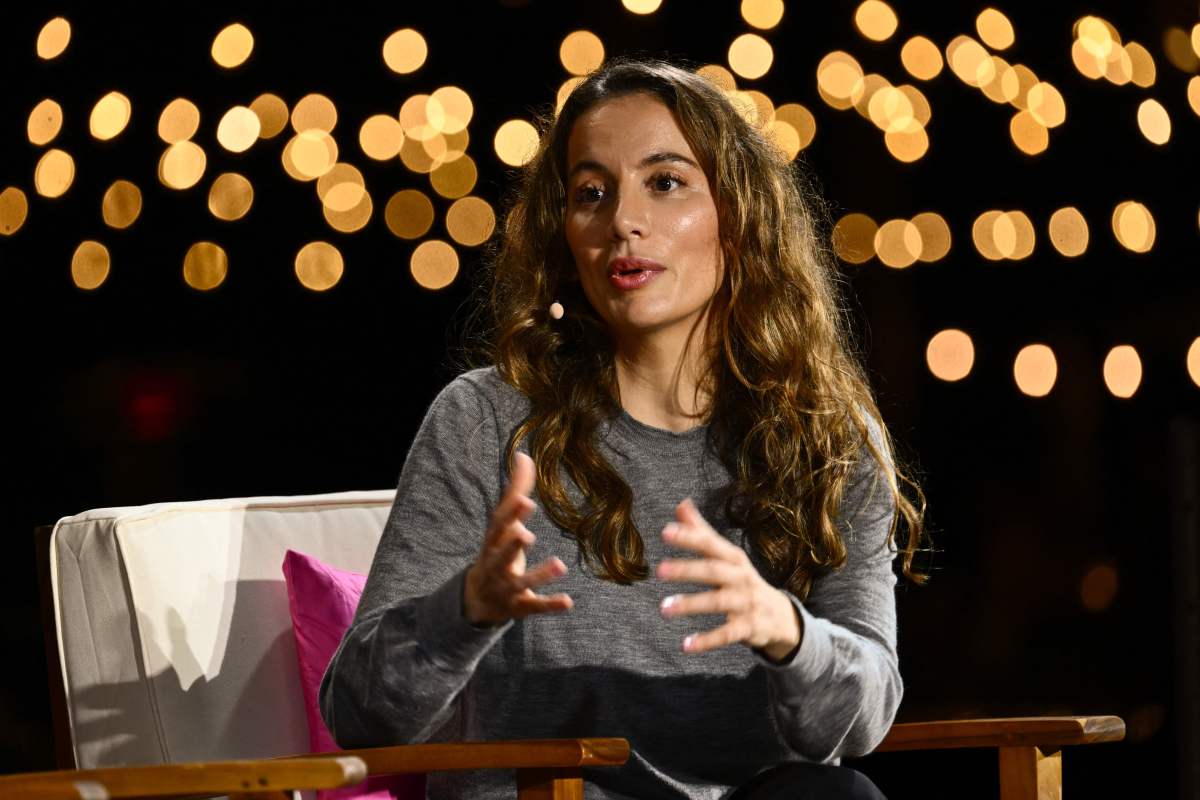
Thinking Machines Lab, the AI startup founded by former OpenAI CTO Mira Murati, released its first open-weight AI model, Inkling, on Wednesday. Inkling is a mixture-of-experts (MoE) system with 975 billion total parameters, activating about 41 billion for any given task. It was trained on 45 trillion tokens of text, image, audio, and video, and reasons natively across all four modalities, though its generation is currently limited to text output, including code, styled artifacts, and structured data. The company emphasizes that Inkling is designed to give calibrated answers, flagging uncertainty rather than guessing, and allows users to dial ‘thinking effort’ up or down to trade for speed.
Thinking Machines is betting against the one-size-fits-all approach of companies like OpenAI, Anthropic, and Google. The company argues that AI trained centrally and set in stone underperforms AI that organizations shape themselves, because much expertise is specific to the people who hold it. Inkling is open-weight, meaning outside developers can download and modify it directly. The company markets it as a starting point for organizations to fine-tune via Tinker, its model-customization platform. However, this means customers must ensure their customizations are safe, and fine-tuning requires serious ML talent.
On performance, Thinking Machines does not claim Inkling is best-in-class, stating it is ‘not the strongest model available today, closed or open.’ On one benchmark, Inkling uses a third as many tokens as Nvidia’s Nemotron 3 Ultra to achieve the same coding performance. The clearest evidence for the company’s argument came from a project with Bridgewater Associates, the world’s largest hedge fund. Researchers took an existing open-source model and trained it further on Bridgewater’s financial expertise, achieving 84.7% on financial reasoning tests, beating top proprietary models while costing roughly a fourteenth as much to run. These results come from the companies’ own evaluation, not an independent one.
The article also addresses industry context. Microsoft CEO Satya Nadella warned that enterprises using proprietary AI models effectively pay twice: in subscription costs and by handing over business knowledge. Hugging Face CEO Clem Delangue predicted that frontier models will be reserved for experimentation while most production shifts to private or open-source alternatives. Thinking Machines’ revenue model is based on Tinker and a hosting ecosystem, not on metered access to the model itself. The company struck a strategic partnership with Nvidia in March to deploy a gigawatt of Vera Rubin computing capacity, and trained Inkling entirely on Nvidia’s GB300 NVL72 systems. However, the company hasn’t disclosed how it plans to balance costs against revenue, and a reported $50 billion fundraising round was said to have stalled.
Regarding training data, Thinking Machines pre-trained Inkling from scratch but used other open-weight models, including Moonshot AI’s Kimi K2.5, to help generate early post-training data before large-scale reinforcement learning took over. The next model will use fully self-contained post-training. Headcount is now roughly 200, and the company’s culture favors continuity over reliance on any single personality, despite the prominence of co-founder Mira Murati.