⭐⭐⭐⭐ 4.2
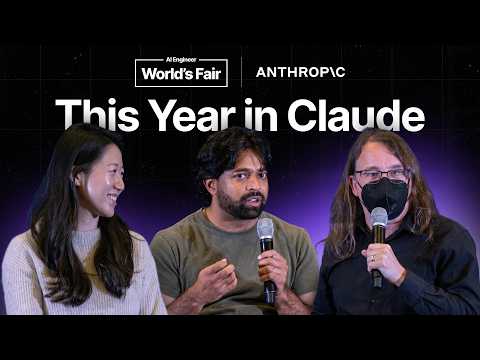
The conversation exposes a fundamental tension in modern software development: traditional engineering norms—like avoiding rewrites, long-term waterfall planning, and manually writing every line of code—are becoming outdated as coding agents like Claude Code mature. Developers are shifting from low-level implementation to higher-level product strategy, managing and refining model outputs rather than crafting each function themselves. This raises questions about what skills matter most and whether established best practices still hold in an era of rapidly improving agent capabilities.
The concrete technical path involves several product moves from Anthropic. Claude Tag introduces proactive, multiplayer agentic workflows in tools like Slack, where the agent monitors bugs, drafts PRs, and retains team memory—currently landing over 65% of product PRs for the Anthropic team. Auto Mode is presented as the recommended way to handle long-running agentic tasks safely, backed by heavy investment in evals and red-teaming to mitigate prompt injection and data exfiltration. The team also discusses reducing system prompts for frontier models, optimizing for capability and user experience rather than piling on instructions.
The serious takeaway for builders is to stop “negotiating against themselves.” Because implementation costs have dropped dramatically, teams should focus on building the bigger, more ambitious things they previously thought impossible. Product sense, prototyping, and rapid iteration powered by high-quality test suites become the new core competencies. The speakers encourage developers to embrace the cultural shift, use agentic tools to explore absurd side projects, and push toward a future where models serve as interaction design partners that bridge abstract ideas and production-ready software.
The conversation exposes a fundamental tension in modern software development: traditional engineering norms—like avoiding rewrites, long-term waterfall planning, and manually writing every line of code—are becoming outdated as coding agents like Claude Code mature. Developers are shifting from low-level implementation to higher-level product strategy, managing and refining model outputs rather than crafting each function themselves. This raises questions about what skills matter most and whether established best practices still hold in an era of rapidly improving agent capabilities.
The concrete technical path involves several product moves from Anthropic. Claude Tag introduces proactive, multiplayer agentic workflows in tools like Slack, where the agent monitors bugs, drafts PRs, and retains team memory—currently landing over 65% of product PRs for the Anthropic team. Auto Mode is presented as the recommended way to handle long-running agentic tasks safely, backed by heavy investment in evals and red-teaming to mitigate prompt injection and data exfiltration. The team also discusses reducing system prompts for frontier models, optimizing for capability and user experience rather than piling on instructions.
The serious takeaway for builders is to stop “negotiating against themselves.” Because implementation costs have dropped dramatically, teams should focus on building the bigger, more ambitious things they previously thought impossible. Product sense, prototyping, and rapid iteration powered by high-quality test suites become the new core competencies. The speakers encourage developers to embrace the cultural shift, use agentic tools to explore absurd side projects, and push toward a future where models serve as interaction design partners that bridge abstract ideas and production-ready software.