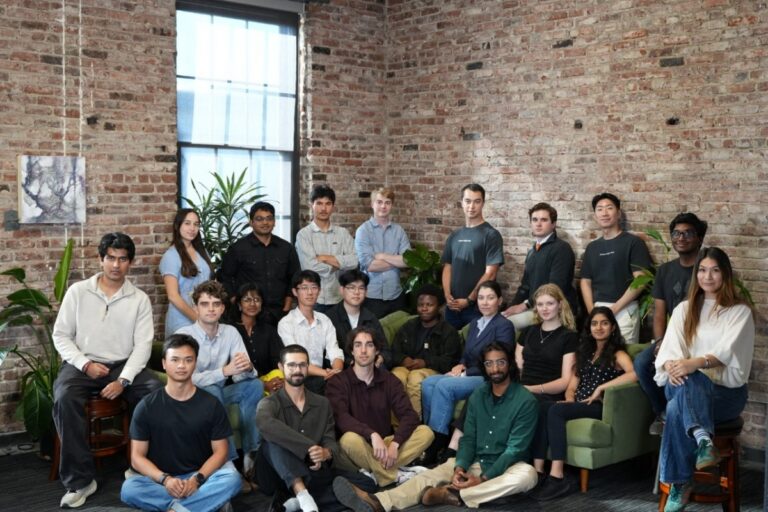
Google Accelerator: 93% survival rate via deep technical mentorship
The article reveals the tension between isolated startup ambition and the systemic support required to build globally scalable companies. While many accelerators struggle with high failure rates, Google argues that true innovation happens “elsewhere,” outside its own walls. The program’s 93% portfolio survival rate and $135.1B collective valuation suggest that bridging raw entrepreneurship with deep technical mentorship, rather than generic business coaching, is the decisive factor. The data quietly challenges the assumption that most startups fail because of product-market fit; instead, survival correlates with access to world-class engineering ecosystem and architectural guidance.
The concrete technical path is a bespoke, developer-first engagement model. Startups do not receive high-level business advice but instead work directly with Google engineers and product managers on their hardest technical problems—architecturing AI pipelines, optimizing model inference, or hardening robotics software for production. The program’s expansion into specialized frontiers like the Google DeepMind Accelerator for AI-native robotics in Europe and the GDM Accelerator for biodiversity foundation models in APAC signals a shift from horizontal acceleration to vertical deep tech. The unified alumni community of 1,750+ startups and 3,000 founders further creates a networked hive mind, where companies influence Google product roadmaps and learn from each other’s technical builds.
A serious builder should take away that equity-free, engineer-to-engineer support from a platform company can be more valuable than capital for infrastructure-intensive startups. The 93% survival rate is not accidental—it comes from aligning sovereign-level policy, as seen in Australia embedding the Google AI stack into national R&D strategy, and Canada citing the accelerator in a G7 report. For technical founders, the lesson is to prioritize programs that offer deep architectural mentorship over generic acceleration, and to view platform alignment as a strategic moat rather than a dependency. The open applications for GFSA Southeast Asia and the AI for Science track are concrete entry points to this network.